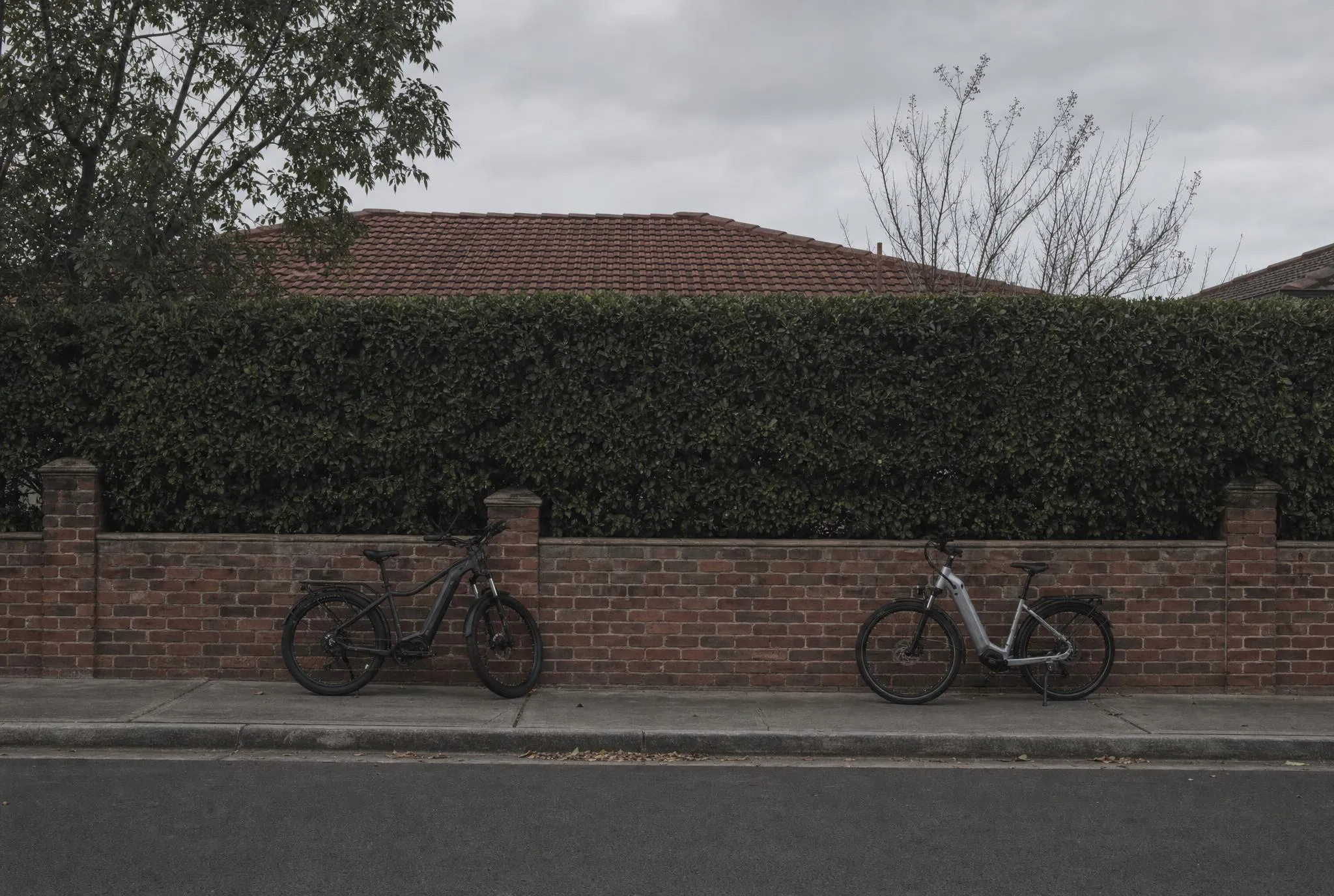
Are e-bikes legal in South Australia?
Yes, if your e-bike is a power-assisted pedal cycle under the national standard. SA treats it as a bicycle. No licence or rego. Footpaths generally allowed. Helmet compulsory, $133 fine.
- What counts as an e-bike
- A power-assisted pedal cycle under the Commonwealth vehicle standard. SA treats it as a bicycle. Another pedal bike with a motor up to 200 watts is a bicycle under the road rules, but only a power-assisted pedal cycle escapes licence and rego 1
- Footpaths
- Generally allowed. The footpath rule only bites where another SA law bans riding there, and a "no bicycles" sign must be obeyed. Keep left and give way to pedestrians 2
- Your top speed
- SA's road rules set no separate speed limit for bicycles 2
- Minimum age
- None set by SA's road rules. The 16-year minimum riding age for personal mobility devices does not apply to bicycles 3
- Helmet
- Required, unless you are a Sikh rider wearing a turban. Riding without one is a $133 on-the-spot fine 2
- Lights at night
- Required. At night, or in weather that cuts visibility, you need a white front light and a red rear light, each visible for 200 m, plus a red rear reflector. A brake and a bell or horn are needed at all times 2
- Licence & rego
- Neither. A power-assisted pedal cycle is excluded from the definition of motor vehicle, so the registration and licence duties don't apply 5
An e-bike is legal to ride in South Australia if it is the right kind of e-bike. SA treats a compliant one as a bicycle, so ordinary bike rules apply. 1 A compliant one needs no licence and no registration, there is no minimum riding age, and footpaths are generally open. A helmet is compulsory.
This is the opposite of the e-scooter. An e-scooter in SA is a personal mobility device with its own rules. You must be 16. Speeds are capped. Where you can ride is more restricted. 3 A compliant e-bike is a bicycle and none of that applies.
What counts as a legal e-bike in South Australia?
SA’s current e-bike definitions took effect on 13 July 2025. The state defines a “power-assisted pedal cycle” and then treats it as a bicycle in the road rules. 1
reg 3(1) SA's power-assisted pedal cycle definition Road Traffic (Miscellaneous) Regulations 2014 (SA) 1
power-assisted pedal cycle means a power-assisted pedal cycle within the meaning of vehicle standards determined under the Road Vehicle Standards Act 2018 of the Commonwealth, but does not include such a pedal cycle if it has an auxiliary propulsion motor comprised (in whole or in part) of an internal combustion engine;
The definition points to the Commonwealth vehicle standard. SA’s own text does not repeat its limits. 1 Under that standard, a power-assisted pedal cycle is one of two things. One is a pedal bike with electric motors totalling no more than 200 watts that can’t be moved by the motor alone, weighs under 50 kg and has a height-adjustable seat. The other is a pedelec of up to 250 watts continuous rated power. Its assistance tapers above 6 km/h and cuts out at 25 km/h, or above 6 km/h when you stop pedalling. 6
Definitions — PAPC, EPAC Commonwealth PAPC and EPAC definitions Vehicle Standard (Australian Design Rule – Definitions and Vehicle Categories) 2005 (Cth) 6
POWER-ASSISTED PEDAL CYCLE - means a vehicle, designed to be propelled through a mechanism primarily using human power, that: meets the following criteria: is equipped with one or more auxiliary propulsion electric motors with a combined maximum power output not exceeding 200 watts; cannot be propelled exclusively by the motor or motors; has a tare mass (including batteries) of less than 50 kg; has a height-adjustable seat; or is an electrically power-assisted cycle; but does not include a vehicle that has an internal combustion engine. […] ELECTRICALLY POWER-ASSISTED CYCLE (EPAC) - means an electrically-powered pedal cycle with a maximum continuous rated power of 250W, of which the output is: progressively reduced as the cycle’s travel speed increases above 6 km/h; and cut off, where: the cycle reaches a speed of 25 km/h; or the cyclist is not pedalling and the travel speed exceeds 6km/h.
SA’s prescribed “bicycle” definition does contain a wattage threshold. It works as an outer limit for builds that don’t meet the Commonwealth standard:
reg 3(2a) Prescribed bicycle: PAPCs in; other bikes over 200 W out Road Traffic (Miscellaneous) Regulations 2014 (SA) 1
(2a) For the purposes of the definition of bicycle in section 5(1) of the Act, a vehicle with 2 or more wheels that is built to be propelled by human power through a belt, chain or gears (whether or not it has an auxiliary motor) including— (a) a pedicab, penny farthing and tricycle; and (b) a power-assisted pedal cycle, but not including a wheelchair, wheeled recreational device, wheeled toy, or any vehicle (other than a vehicle referred to in paragraph (b)) with an auxiliary motor capable of generating a power output over 200 watts (whether or not the motor is operating) is prescribed.
A bike that meets the Commonwealth standard is a bicycle in SA law. A motor-assisted bike that doesn’t meet the standard is a bicycle only if its motor outputs no more than 200 watts. Over that limit, it is not a bicycle. 1
The road rules use the same structure:
Dictionary A PAPC is a bicycle under the road rules Australian Road Rules (as published under the Road Traffic Act 1961 (SA)) 2
bicycle means a vehicle with 2 or more wheels that is built to be propelled by human power through a belt, chain or gears (whether or not it has an auxiliary motor), and— (a) includes a pedicab, penny-farthing and tricycle; and (b) includes a power assisted pedal cycle (within the meaning of vehicle standards determined under the Motor Vehicle Standards Act 1989 of the Commonwealth); but (c) does not include a wheelchair, wheeled recreational device, wheeled toy, or any vehicle (other than a vehicle referred to in paragraph (b)) with an auxiliary motor capable of generating a power output over 200 watts (whether or not the motor is operating).
SA’s motor vehicle law is separate. It sets the registration and licence duties, and it excludes a power-assisted pedal cycle from its own definition of “motor vehicle”. 4 5
s 5(1) "Motor vehicle": the definition with the regulations hook Motor Vehicles Act 1959 (SA) 4
motor vehicle means a vehicle that is built to be propelled by a motor that forms part of the vehicle but does not include a device or vehicle of a kind excluded from this definition by the regulations;
reg 5 A PAPC is excluded from the motor-vehicle definition Motor Vehicles Regulations 2025 (SA) 5
5—Meaning of motor vehicle (1) The following kinds of devices and vehicles are excluded from the definition of motor vehicle in section 5(1) of the Act: (a) personal mobility devices; (b) power-assisted pedal cycles. (2) In this regulation— personal mobility device has the same meaning as in the Road Traffic Act 1961.
So a power-assisted pedal cycle needs no registration and no driver licence. 4 5
What makes an e-bike illegal in South Australia?
A motor over 200 watts, on a bike that isn’t a power-assisted pedal cycle under the Commonwealth standard, takes it outside SA’s bicycle definition. 1 SA’s motor vehicle law excludes only power-assisted pedal cycles, so a bike like this, built to be propelled by its own motor, is a motor vehicle. 4 5
SA’s motor vehicle law then applies to it. A motor vehicle must be registered before it is driven on a road, and the rider must hold a licence for that class of vehicle. 4 A build like this is a motor vehicle. It must be registered, and the rider licensed, before it is ridden on a road. 4 5
Where can you ride an e-bike in SA, and how fast?
Footpaths. SA’s footpath rule stops a rider aged 12 or older only where another SA law prohibits footpath riding. 2
r 250(1)–(3) Footpath rule: 12+ bar, with medical-certificate exceptions Australian Road Rules (as published under the Road Traffic Act 1961 (SA)) 2
250—Riding on a footpath or shared path (1) The rider of a bicycle who is 12 years old or older must not ride on a footpath if another law of this jurisdiction prohibits the rider from riding on the footpath. Offence provision. […] (1A) The rider does not have to comply with subrule (1) if— (a) the rider is carrying a medical certificate that states a medical practitioner believes the rider should be allowed to ride on the footpath because of a medical condition that the rider has; and (b) the rider is complying with any conditions stated in the medical certificate; and (c) no other law of this jurisdiction states that this subrule does not apply. […] (1B) Also, the rider does not have to comply with subrule (1) if— (a) the rider is with another rider who is riding on a footpath; and (b) the other rider is— (i) carrying a medical certificate that states a medical practitioner believes the rider should be allowed to ride on the footpath because of a medical condition that the rider has; or (ii) a child under 12 years of age. (1C) However, the rider is exempt under subrule (1A) or (1B) only if the rider who is carrying the medical certificate immediately produces the medical certificate when an authorised person or police officer asks to see the certificate. […] (2) The rider of a bicycle riding on a footpath or shared path must— (a) keep to the left of the footpath or shared path unless it is impracticable to do so; and (b) give way to any pedestrian on the footpath or shared path. Offence provision. […] (3) In this rule— footpath does not include a separated footpath.
Separately, riding where a “no bicycles” sign or road marking applies is a $72 fine. 1 On any footpath or shared path, keep to the left and give way to pedestrians. 2
Speed. SA’s road rules set no separate speed limit for bicycles. 2
This is different from an e-scooter. An e-scooter in SA is capped at 10 km/h on footpaths and 25 km/h on roads. It generally can’t use roads with a limit over 50 km/h, with some exceptions. 3 A compliant e-bike carries none of those device-specific caps.
Is there a minimum age to ride an e-bike in SA?
No. SA’s road rules set no minimum age to ride a bicycle. The 16-year minimum riding age for personal mobility devices does not apply to bicycles, and a compliant e-bike is a bicycle. 3
reg 30A(11)–(12) The 16-year minimum is for personal mobility devices Road Traffic (Road Rules—Ancillary and Miscellaneous Provisions) Regulations 2014 (SA) 3
(11) A person under the age of 16 years must not ride a personal mobility device on a road or a road-related area. Maximum penalty: $2 500. (12) A person who has possession or control of a personal mobility device must not cause or permit a person under the age of 16 years to ride or be carried on the device. Maximum penalty: $2 500.
Do you need a helmet on an e-bike in SA?
Yes. The bicycle helmet rule applies to a compliant e-bike, because it is a bicycle. You must wear an approved helmet, fitted and fastened. So must a passenger, apart from a paying passenger on a three- or four-wheeled bicycle. 2
r 256(1)–(3) Bicycle helmet, rider and passenger Australian Road Rules (as published under the Road Traffic Act 1961 (SA)) 2
256—Bicycle helmets (1) The rider of a bicycle must wear an approved bicycle helmet securely fitted and fastened on the rider's head, unless the rider is exempt from wearing a bicycle helmet under another law of this jurisdiction. Offence provision. SA NOTE— For South Australia, see regulation 34 of the Road Traffic (Road Rules—Ancillary and Miscellaneous Provisions) Regulations 2014. […] (2) A passenger on a bicycle that is moving, or is stationary but not parked, must wear an approved bicycle helmet securely fitted and fastened on the passenger's head, unless the passenger is— (a) a paying passenger on a three or four-wheeled bicycle; or (b) exempt from wearing a bicycle helmet under another law of this jurisdiction. Offence provision. […] (3) The rider of a bicycle must not ride with a passenger on the bicycle unless the passenger complies with subrule (2). Offence provision.
Riding without a helmet is a $133 on-the-spot fine. 1
Sikh riders. A rider or passenger of the Sikh religion who is wearing a turban is exempt from the helmet rule. 3
Do you need lights on an e-bike at night in SA?
Yes. Riding at night, or in hazardous weather that cuts visibility, a bicycle must display lights and a reflector. A compliant e-bike is a bicycle, so the rule applies to it. 2
r 259 Night and hazardous-weather lighting for a bicycle Australian Road Rules (as published under the Road Traffic Act 1961 (SA)) 2
259—Riding at night The rider of a bicycle must not ride at night, or in hazardous weather conditions causing reduced visibility, unless the bicycle, or the rider, displays— (a) a flashing or steady white light that is clearly visible for at least 200 metres from the front of the bicycle; and (b) a flashing or steady red light that is clearly visible for at least 200 metres from the rear of the bicycle; and (c) a red reflector that is clearly visible for at least 50 metres from the rear of the bicycle when light is projected onto it by a vehicle's headlight on low-beam. Offence provision. Note— Low-beam and night are defined in the dictionary.
That means a white light at the front and a red light at the rear, each visible for 200 metres. A red reflector at the rear must be visible for 50 metres. The light may be steady or flashing. 2 Riding without the required lights is a $72 on-the-spot fine. 1
Your bike must also have an effective brake and a warning device such as a bell, in working order. 2 Riding without them is a $72 fine. 1
What happens if you’re stopped in SA?
If police stop you on an e-bike in South Australia, the first question is whether the bike is a power-assisted pedal cycle.
A power-assisted pedal cycle under the Commonwealth vehicle standard is a bicycle. 1 You ride it with no licence and no registration, and there is no minimum riding age. Footpaths are generally open. The road rules that apply to any cyclist apply to you.
Each of these offences has a fixed on-the-spot fine. No helmet is $133. The $72 offences are not keeping left or giving way on a path, riding where a “no bicycles” sign applies, riding at night without lights, and riding with no working brake or bell. 1
A bike that isn’t a power-assisted pedal cycle under the national standard gets no exclusion from SA’s motor vehicle law. If its motor forms part of it, it must be registered, and the rider licensed, before it is ridden on a road. 4 5
What it costs to get it wrong
| Offence | Penalty | Source |
|---|---|---|
| Riding without an approved helmet, rider or passenger (r 256(1)/(2)/(3)) | $133 on the spot | 1 |
| Failing to keep left or give way on a footpath or shared path (r 250(2)) | $72 on the spot | 1 |
| Riding a bicycle where a "no bicycles" sign or road marking applies (r 252(1)) | $72 on the spot | 1 |
| Riding at night or in hazardous weather without required lights (r 259) | $72 on the spot | 1 |
| Riding without an effective brake or warning device (r 258) | $72 on the spot | 1 |
| Riding not astride the seat or with less than one hand on the bars (r 245) | $72 on the spot | 1 |
Common questions
Are e-bikes legal in South Australia?
Yes, if it's a power-assisted pedal cycle under the Commonwealth vehicle standard. That counts as a bicycle in SA, and SA's motor-vehicle law excludes it, so you need no licence and no registration. Footpaths are generally open, and a helmet is compulsory. 1
Do you need a licence or rego for an e-bike in SA?
No. SA's motor vehicle regulations exclude a power-assisted pedal cycle from the definition of motor vehicle. Because it isn't a motor vehicle, the registration and driver licence duties don't apply. 5
How powerful can an e-bike motor be in SA?
A power-assisted pedal cycle is either a pedal bike with electric motors up to 200 watts that can't run on the motor alone, or a pedelec of up to 250 watts that stops assisting at 25 km/h. Those limits come from the Commonwealth standard SA adopts. Another bike with a motor over 200 watts is not a bicycle in SA. 6
Can an e-bike have a throttle in SA?
Only within limits. Under the Commonwealth standard SA adopts, a 200-watt power-assisted pedal cycle can't be moved by its motor alone. A 250-watt pedelec's motor must cut out above 6 km/h when you stop pedalling. A bike that runs on its motor alone isn't a power-assisted pedal cycle, so SA's licence and rego exclusion doesn't cover it. 6
Can you ride an e-bike on the footpath in SA?
Generally yes. A bicycle rider may use a footpath by default, and the rule only bites where another SA law bans riding there. A posted "no bicycles" sign or road marking must be obeyed — riding where one applies is a $72 fine. Keep to the left and give way to pedestrians. 2
Is there a minimum age to ride an e-bike in SA?
No. SA's 16-year minimum riding age for personal mobility devices, like e-scooters, does not apply to bicycles. A compliant e-bike is a bicycle, and SA's road rules set no minimum riding age for bicycles. 3
Do you need a helmet on an e-bike in SA?
Yes. You must wear an approved helmet, fitted and fastened, and so must a passenger. A rider or passenger of the Sikh religion who is wearing a turban is exempt. Riding without one is a $133 on-the-spot fine. 2
Do you need lights on an e-bike at night in SA?
Yes. Riding at night, or in weather that cuts visibility, you need a white front light and a red rear light, each visible for 200 metres, plus a red rear reflector visible for 50 metres. Riding without them is a $72 on-the-spot fine. Your bike also needs an effective brake and a bell or similar warning device at all times. 2
What happens if your e-bike doesn't meet the standard in SA?
SA's motor vehicle law excludes only power-assisted pedal cycles. A bike outside that class that is built to be propelled by its own motor is a motor vehicle under that law. It must be registered, and the rider licensed, before it is ridden on a road. 4
How does an e-bike differ from an e-scooter in SA?
They are two different device classes. An e-bike is a bicycle — no minimum riding age, no separate speed cap, footpaths generally open. An e-scooter is a personal mobility device — you must be 16, speeds are capped at 10 km/h on footpaths and 25 km/h on roads, and where you can ride is more restricted. 3
Every source on this page
The small numbered marks throughout this page point to this list — 1 means source 1 below.
- Road Traffic (Miscellaneous) Regulations 2014 (SA), reg 3(1) (power-assisted pedal cycle), reg 3(2a) (prescribed bicycle), Sch 4 (expiation fees, version 25.9.2026)
- Australian Road Rules (as published under the Road Traffic Act 1961 (SA)), Dictionary (bicycle), rr 245, 247, 250, 252, 256, 258, 259
- Road Traffic (Road Rules—Ancillary and Miscellaneous Provisions) Regulations 2014 (SA), reg 30A (personal mobility device age and speed limits), reg 34 (Sikh helmet exemption)
- Motor Vehicles Act 1959 (SA), s 5(1) (motor vehicle definition), s 9 (duty to register), s 74 (duty to hold licence)
- Motor Vehicles Regulations 2025 (SA), reg 3(1) (power-assisted pedal cycle), reg 5 (meaning of motor vehicle)
- Vehicle Standard (Australian Design Rule – Definitions and Vehicle Categories) 2005 (Cth), Definitions — power-assisted pedal cycle; electrically power-assisted cycle (EPAC), Compilation No. 16
Sourced from the South Australian Legislation website at 12 Oct 2026. For the latest information on South Australian Government legislation, please go to www.legislation.sa.gov.au/. Despite any headers, footers or other markings, this legislation is NOT published under the Legislation Revision and Publication Act 2002. To access legislation that is published under the Legislation Revision and Publication Act 2002, please go to www.legislation.sa.gov.au/. © Government of South Australia. Licensed under CC BY 4.0. Reproduced without changes. Creative Commons Attribution 4.0 licence.
Sourced from the South Australian Legislation website at 14 Oct 2026. For the latest information on South Australian Government legislation, please go to www.legislation.sa.gov.au/. Despite any headers, footers or other markings, this legislation is NOT published under the Legislation Revision and Publication Act 2002. To access legislation that is published under the Legislation Revision and Publication Act 2002, please go to www.legislation.sa.gov.au/. © Government of South Australia. Licensed under CC BY 4.0. Reproduced without changes. Creative Commons Attribution 4.0 licence.
Sourced from the Federal Register of Legislation at 15 Oct 2026. For the latest information on Australian Government law please go to https://www.legislation.gov.au. Licensed under CC BY 4.0. Reproduced without changes. This is not an official version. Creative Commons Attribution 4.0 licence.
Other rules for South Australia
- Are e-scooters legal in South Australia? Legal, with conditions
- How high can a fence be in SA? Legal, with conditions
- Is it legal to record a conversation in South Australia? Legal, with conditions
- What are the pool fence rules in SA? Legal, with conditions
E-bikes rules elsewhere
- Australian Capital Territory Legal, with conditions
- New South Wales Legal, with conditions
- Northern Territory Legal, with conditions
- Queensland Legal, with conditions
- Tasmania Legal, with conditions
- Victoria Legal, with conditions
- Western Australia Legal, with conditions
Page history
Every change to this page
- 15 Oct 2026
- First published. Current to the Road Traffic (Miscellaneous) Regulations 2014 (SA) version 25.9.2026 (reg 3(1) power-assisted pedal cycle definition inserted 13.7.2025; reg 3(2a) bicycle prescribed, inserted 13.7.2025; Sch 4 expiation fees substituted by 26/2026 r 3, operative 1.7.2026); the Australian Road Rules (SA) version 30.3.2024; the Road Traffic (Road Rules—Ancillary and Miscellaneous Provisions) Regulations 2014 (SA) version 12.2.2026; the Motor Vehicles Act 1959 (SA) version 24.11.2025; and the Motor Vehicles Regulations 2025 (SA) version 1.8.2026.