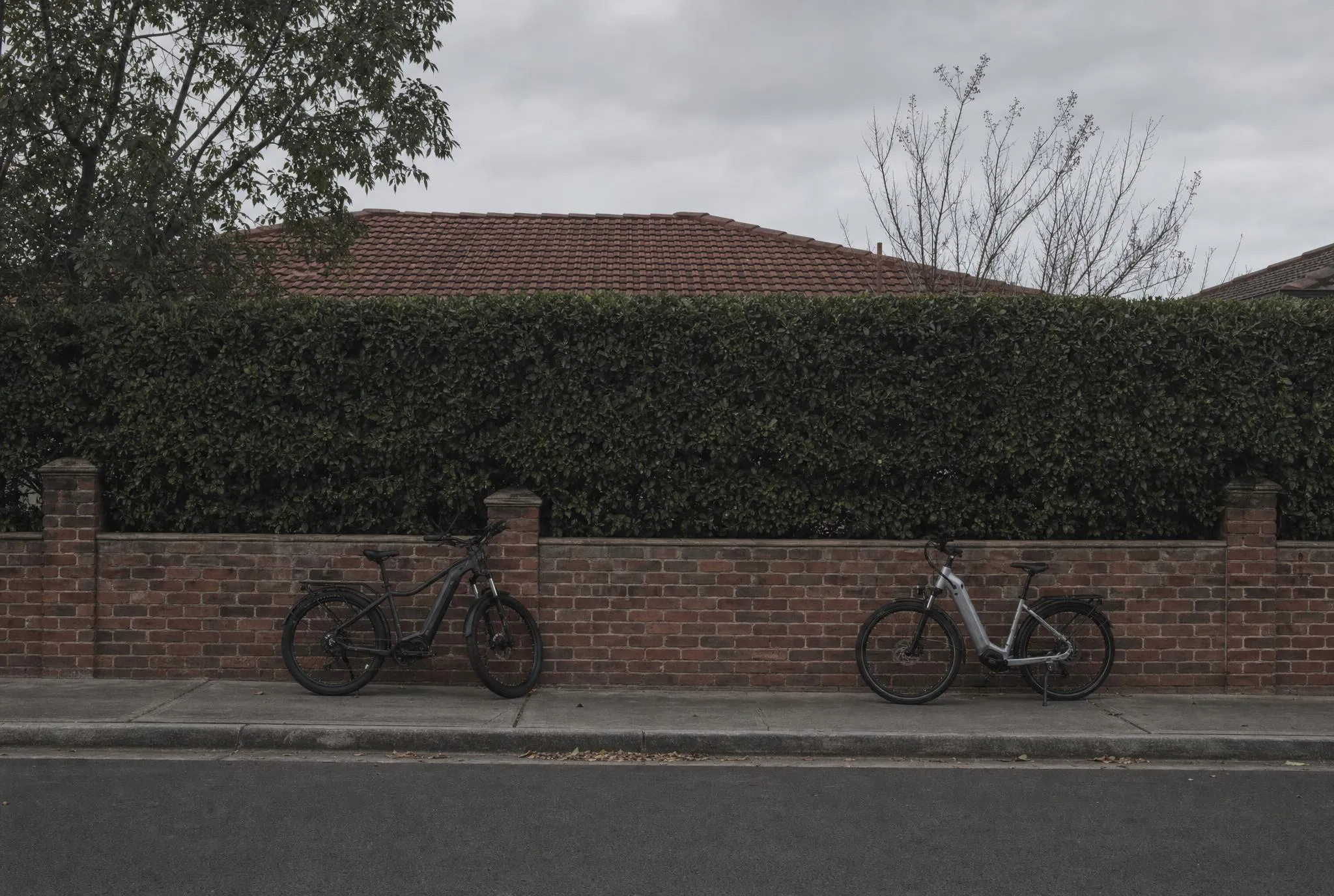
Are e-bikes legal in Tasmania?
Yes, if your e-bike is a bicycle: built to be pedalled and within the power standard. No licence, rego or minimum riding age. Wear a helmet and use lights at night. Footpaths are open, with limits.
- What counts as an e-bike
- A bike built to be pedalled, with a motor up to 200 watts; or a pedal-assist bike that meets the Commonwealth power-assisted pedal cycle standard. A stronger motor that isn't a compliant pedal-assist cycle, or a build you can't pedal, isn't one 1
- Footpaths
- Yes. Keep left and give way to people on foot. No rider may ride where a no-bicycles sign applies. A rider 12 or older must also stay off where another law bars it 1
- Your top speed
- No limit set for e-bikes. You follow the ordinary limit for the road or path you're on 1
- Minimum age
- None. The Road Rules set no riding age and no child-supervision rule for a bicycle 1
- Helmet
- Required. An approved bicycle helmet, fitted and fastened, for you and any passenger 1
- Licence & rego
- Neither. A compliant e-bike is a bicycle, and the licence and registration rules reach only motor vehicles 2
- Lights at night
- Required. A white front light and a red rear light, each visible 200 metres, plus a red rear reflector, at night or in poor visibility 1
An e-bike is legal to ride in Tasmania if it is the right kind of e-bike. The law treats a compliant one as a bicycle, so ordinary bike rules apply. 1 You need no licence to ride it, and the Road Rules set no minimum age.
That is a different picture from the e-scooter. Both are allowed on Tasmanian footpaths. But an e-scooter is capped at 15 km/h on a footpath and 25 km/h elsewhere, and you have to be at least 16 to ride one. An e-bike has none of those limits. In law it is a bicycle, and the e-scooter rules don’t reach it. 1
What counts as a legal e-bike in Tasmania?
A pedal bike with an electric motor. There are two ways a bike qualifies. 1
Sch 5 Dictionary — bicycle A pedal e-bike is a bicycle Road Rules 2019 (Tas) 1
bicycle means a vehicle with 2 or more wheels that is built to be propelled by human power through a belt, chain or gears (whether or not it has one or more auxiliary motors), and – (a) includes a pedicab, penny-farthing and tricycle; and (ab) includes a bicycle with an electrically powered auxiliary motor (or motors) with a power output (or combined power output) of not more than 200 watts; and (b) includes an electrically power-assisted cycle within the meaning of vehicle standards determined under the Road Vehicle Standards Act 2018 of the Commonwealth, as amended from time to time; but (ba) does not include a bicycle with an internal combustion engine powered motor (or motors) of any power output; and (c) does not include a personal mobility device, wheelchair, wheeled recreational device, wheeled toy, or any vehicle (other than a vehicle referred to in paragraph (b)) with an auxiliary motor capable of generating a power output over 200 watts (whether or not the motor is operating);
The first way is a motor of no more than 200 watts, on a bike you can still pedal. The second is an “electrically power-assisted cycle”, which Tasmania defines by pointing to the Commonwealth vehicle standard. 1
Tasmania writes only the 200-watt figure into its own law and leaves the rest to the Commonwealth standard. For comparison, Western Australia’s rules define a “pedalec” by the same European EN 15194 standard and set it at 250 watts. 4
Because the bike is built to be pedalled with a helper motor inside those limits, the law counts it as a bicycle. 1 That is why it needs no registration and no number plate, and why you ride it under bicycle rules. A bike with a petrol motor is shut out whatever its size, and so is a motor over 200 watts that isn’t a compliant pedal-assist cycle. 1
Do you need a licence or registration for an e-bike in Tasmania?
No. Both rules reach only a “motor vehicle”, and a compliant e-bike isn’t one. The Vehicle and Traffic Act defines a motor vehicle as one built to be propelled by a motor, then lists what falls outside that. A pedal cycle with a motor up to 200 watts, and a power-assisted pedal cycle, are both on the list. 2
s 3(1) — motor vehicle A compliant e-bike is not a motor vehicle Vehicle and Traffic Act 1999 (Tas) 2
motor vehicle means a vehicle that is built to be propelled by a motor that forms part of the vehicle but does not include – (a) an aircraft; or (b) a motor vehicle that travels only on a railway, tramway or other fixed track; or (c) a pedal cycle with an electrically powered auxiliary motor (or motors) with a power output (or combined power output) of not more than 200 watts or such other wattage as is prescribed; or (ca) a power-assisted pedal cycle within the meaning of the relevant ADR; or […] (g) a vehicle of a class excluded by regulation from the ambit of this definition;
There is a second way a vehicle can be excluded: a regulation can carve out a whole class. The regulations use that power for air-cushion vehicles and personal mobility devices. 3 E-bikes aren’t in it, and don’t need to be: the Act already excludes them.
reg 144(2) The exclusion list names only air-cushion vehicles and PMDs Vehicle and Traffic (Driver Licensing and Vehicle Registration) Regulations 2021 (Tas) 3
The following classes of vehicles are excluded from the ambit of the definition of motor vehicle under paragraph (g) of that definition in section 3 of the Act: (a) air cushion vehicles; (b) personal mobility devices.
With the e-bike outside the “motor vehicle” definition, the licence and registration offences never bite it. 2
ss 8(1), 27(1) Licence and rego rules bite only a motor vehicle Vehicle and Traffic Act 1999 (Tas) 2
8. Requirement to hold driver licence (1) A person must not drive a motor vehicle on a public street unless the person – (a) holds a driver licence under this Act authorising the person to drive a motor vehicle of the relevant class; or (b) is exempt, under subsection (2), from the requirement to hold a driver licence under this Act authorising the person to drive a motor vehicle of the relevant class; or (c) is exempted by the regulations from the requirement to hold a driver licence authorising the person to drive a motor vehicle of the relevant class. Penalty: In the case of – (a) a first offence – a fine not exceeding 20 penalty units; and (b) a second or subsequent offence – a fine not exceeding 40 penalty units or imprisonment for a term not exceeding 3 months. […] 27. Requirement for registration (1) Subject to subsection (3), a person must not use, or permit the use of, a motor vehicle or a trailer on a public street unless the vehicle is registered under this Act. Penalty: In the case of – (a) a first offence – a fine not exceeding 20 penalty units; and (b) a second or subsequent offence – (i) for a body corporate – a fine not exceeding 200 penalty units; and (ii) for an individual – a fine not exceeding 40 penalty units or imprisonment for a term not exceeding 3 months.
This is also where a bike can tip over into being illegal. A motor over 200 watts that is not a compliant pedal-assist cycle, or a build you can’t pedal at all, is no longer a bicycle. 1 In Tasmania, a bike the motor drives is a motor vehicle. Registration is required before it can go on a public street, and its driver has to be licensed. 2 Unless it is registered, riding one in public is using an unregistered motor vehicle. Unless you hold a licence for that class of motor vehicle, it is also driving unlicensed. Each offence runs to 20 penalty units for a first offence, and 40 penalty units with up to three months in prison if repeated. 2
Where can you ride an e-bike in Tasmania, and how fast?
On the road, on shared paths and bicycle paths, and on footpaths. 1
r 250 Footpaths: keep left, give way Road Rules 2019 (Tas) 1
250. Riding on a footpath or shared path (1) The rider of a bicycle who is 12 years old or older must not ride on a footpath if another law of this jurisdiction prohibits the rider from riding on the footpath. Penalty: Fine not exceeding 2 penalty units. […] (2) The rider of a bicycle riding on a footpath or shared path must – (a) keep to the left of the footpath or shared path unless it is impracticable to do so; and (b) give way to any pedestrian on the footpath or shared path. Penalty: Fine not exceeding 2 penalty units. […] (3) In this rule – footpath does not include a separated footpath; pedestrian does not include a person in or on a personal mobility device.
Footpaths are open, with two limits. No rider of any age may ride where a “no bicycles” sign or marking applies. A rider aged 12 or older also has to stay off a footpath where another law bars it. On any path, keep left and give way to people on foot. 1
r 252(1) No-bicycles signs and markings Road Rules 2019 (Tas) 1
252. No bicycles signs and markings (1) The rider of a bicycle must not ride on a length of road or footpath to which a no bicycles sign , or a no bicycles road marking, applies. Penalty: Fine not exceeding 2 penalty units. […]
There is no speed cap written for an e-bike. You follow the ordinary limit for wherever you are riding, the same as any bicycle. 1 An e-scooter is held to 15 km/h on a footpath and 25 km/h elsewhere. An e-bike is a bicycle, so no such number applies to it. 1
Tasmania’s Road Rules set no minimum age to ride a bicycle, and no rule that a child must be supervised. An e-scooter rider has to be at least 16. One other age rule applies to towing: a rider must be 16 or older to tow a bicycle trailer that carries a person. 1
Do you need a helmet on an e-bike in Tasmania?
Yes. An approved bicycle helmet, fitted and fastened on your head, for you and anyone you carry. 1
r 256 Bicycle helmet, rider and passenger Road Rules 2019 (Tas) 1
256. Bicycle helmets (1) The rider of a bicycle must wear an approved bicycle helmet securely fitted and fastened on the rider's head, unless the rider is exempt from wearing a bicycle helmet under another law of this jurisdiction. Penalty: Fine not exceeding 2 penalty units. […] (2) A passenger on a bicycle that is moving, or is stationary but not parked, must wear an approved bicycle helmet securely fitted and fastened on the passenger's head, unless the passenger is – (a) a paying passenger on a three or four-wheeled bicycle; or (b) exempt from wearing a bicycle helmet under another law of this jurisdiction. Penalty: Fine not exceeding 2 penalty units. (2A) A person is exempt from wearing an approved bicycle helmet under subrule (1) or (2) if – (a) the person is a member of a religious group; and (b) the person is wearing a type of headdress that is customarily worn by members of the religious group; and (c) the wearing of the headdress makes it impracticable for the person to also wear a bicycle helmet. (3) The rider of a bicycle must not ride with a passenger on the bicycle unless the passenger complies with subrule (2). Penalty: Fine not exceeding 2 penalty units.
The maximum fine is 2 penalty units, $426, and the same applies to carrying a passenger who isn’t wearing one. The rule exempts anyone who is exempt under another Tasmanian law. It also exempts a religious headdress that makes a helmet impracticable, added in December 2025. 1
Do you need lights at night on an e-bike in Tasmania?
Yes. Riding at night, or in weather that cuts visibility, the bike or you must show lights front and rear. 1
r 259 Lights and a reflector at night Road Rules 2019 (Tas) 1
259. Riding at night The rider of a bicycle must not ride at night, or in hazardous weather conditions causing reduced visibility, unless the bicycle, or the rider, displays – (a) a flashing or steady white light that is clearly visible for at least 200 metres from the front of the bicycle; and (b) a flashing or steady red light that is clearly visible for at least 200 metres from the rear of the bicycle; and (c) a red reflector that is clearly visible for at least 50 metres from the rear of the bicycle when light is projected onto it by a vehicle's headlight on low-beam. Penalty: Fine not exceeding 5 penalty units.
That means a white light at the front and a red light at the rear, each visible for 200 metres. You also need a red reflector at the back, visible for 50 metres. Steady or flashing lights both count. Riding without them carries a fine of up to 5 penalty units, $1,065. 1
A second rule applies at any hour: the bike needs at least one working brake and a bell, horn or similar warning device. 1
r 258 Brake and warning device Road Rules 2019 (Tas) 1
258. Equipment on a bicycle A person must not ride a bicycle that does not have – (a) at least one effective brake; and (b) a bell, horn, or similar warning device, in working order. Penalty: Fine not exceeding 5 penalty units.
What happens if the police stop you in Tasmania?
If police stop you on an e-bike in Tasmania, the bicycle offences can apply. So can the motor-vehicle ones, if the bike isn’t compliant.
Each offence has two numbers: the on-the-spot amount on a ticket, and the higher maximum a court can impose. Court maximums are set in penalty units. Tasmania’s unit is $213 from 1 July 2026, fixed by notice in the Government Gazette under the Penalty Units and Other Penalties Act. 6 On the rider, the bicycle offences are small. No helmet is up to 2 penalty units, $426. So is a passenger without one, or not keeping left and giving way on a path. 1 Two offences sit a little higher, at up to 5 penalty units, $1,065 each. One is riding at night without the front light, the rear light or the reflector. The other is riding without a working brake or warning device. 1
The ticket amounts are lower. Each is a fraction of a penalty unit, at $213 a unit. No helmet is $159.75 for the rider and $53.25 for a passenger. Each missing light or the reflector is $159.75. No brake or no warning device is $106.50 each. Not keeping left, not giving way, or riding where a “no bicycles” sign applies is $106.50 each. 7
reg 6; Sch 1 items 341, 342, 344, 349, 350, 351, 355–359 On-the-spot ticket amounts for bicycle offences Traffic (Compliance and Enforcement) Regulations 2017 (Tas) 7
6. Prescribed offences for Part IVB of Act For Part IVB of the Act – (a) the offences specified in column 2 of Parts 1 , 2 , 3 , 4 and 5 of Schedule 1 are prescribed; and (b) the description of each prescribed offence is specified for the offence in column 3 of Parts 1 , 2 , 3 , 4 and 5 of Schedule 1 for illustrative purposes only; and (c) the penalty units and demerit points applicable to each of the prescribed offences are as respectively specified for the offence in columns 4 and 5 of Parts 1 , 2 , 3 , 4 and 5 of Schedule 1 . […] 341. RR 250(2)(a) Rider of bicycle fail to keep left of footpath or shared path 0.50 0 342. RR 250(2)(b) Rider of bicycle fail to give way to pedestrian on footpath or shared path 0.50 0 […] 344. RR 252(1) Rider of bicycle ride where forbidden by sign or road marking 0.50 0 […] 349. RR 256(1) Rider of bicycle fail to wear securely fitted and fastened approved bicycle helmet unless exempt 0.75 0 350. RR 256(2) Bicycle passenger (except fare-paying passenger on 3 or 4-wheeled bicycle) fail to wear securely fitted and fastened approved bicycle helmet unless exempt 0.25 0 351. RR 256(3) Rider of bicycle carry passenger (except fare-paying passenger on 3 or 4-wheeled bicycle) without securely fitted and fastened approved bicycle helmet unless exempt 0.75 0 […] 355. RR 258(a) Ride bicycle with no effective brake 0.50 0 356. RR 258(b) Ride bicycle with no warning device in working order 0.50 0 357. RR 259(a) Cycle at night without white light visible from 200 or more metres in front 0.75 0 358. RR 259(b) Cycle at night without red light visible from 200 or more metres at rear 0.75 0 359. RR 259(c) Cycle at night without red reflector visible from 50 or more metres at rear 0.75 0
The bike is the other question, and it is binary. A pedal e-bike inside the power limits is a bicycle. A build with a motor over 200 watts that isn’t a compliant pedal-assist cycle, or one you can’t pedal, is a motor vehicle instead. 1 A motor vehicle has to be registered to be used on a public street, and its driver has to be licensed. 2 Riding one in public can run into both offences at once: using an unregistered vehicle and driving unlicensed. Each is up to 20 penalty units, $4,260, for a first offence, rising to 40 penalty units, $8,520, with up to three months in prison for a repeat. 2
What it costs to get it wrong
| Offence | Penalty | Source |
|---|---|---|
| No helmet, rider or passenger (r 256) | Up to 2 penalty units — $426 at the 2026–27 unit value. On-the-spot ticket: $159.75 (rider) | 1 |
| No front light, rear light or reflector when riding at night (r 259) | Up to 5 penalty units — $1,065. On-the-spot ticket: $159.75 for each missing item | 1 |
| No working brake or warning device (r 258) | Up to 5 penalty units — $1,065. On-the-spot ticket: $106.50 for each | 1 |
| Not keeping left or not giving way on a footpath or shared path (r 250) | Up to 2 penalty units — $426. On-the-spot ticket: $106.50 for each | 1 |
| Driving a non-compliant build unlicensed (s 8) or using it unregistered (s 27) — it counts as a motor vehicle | Up to 20 penalty units ($4,260) for a first offence; 40 penalty units ($8,520) and up to 3 months' prison if repeated | 2 |
Common questions
Are e-bikes legal in Tasmania?
Yes, if it's a compliant one. A pedal e-bike that stays within the power standard counts as a bicycle, so ordinary bike rules apply. You need no licence and there's no minimum age, but you must wear a helmet and carry lights at night. 1
How many watts can an e-bike have in Tasmania?
Up to 200 watts for an ordinary pedal e-bike. A bike can go higher only if it meets the Commonwealth power-assisted cycle standard. Tasmania's own law states only the 200-watt figure; Western Australia's rules set a pedalec at 250 watts. 1
Do you need a licence or registration for an e-bike in Tasmania?
No. A compliant e-bike is a bicycle, and both the licence rule and the registration rule reach only a motor vehicle, which a bicycle isn't. A build that fails the power standard becomes a motor vehicle, and then both rules apply. 2
Can you ride an e-bike on the footpath in Tasmania?
Yes, with limits. Keep left and give way to people on foot. No rider of any age may ride where a no-bicycles sign or marking applies. A rider 12 or older also has to stay off a footpath where another law bars it. There's no footpath speed cap, unlike an e-scooter, which is held to 15 km/h on a footpath. 1
Is there a minimum age to ride an e-bike in Tasmania?
No. Tasmania's Road Rules set no minimum age to ride a bicycle and no child-supervision rule. Another age rule is for towing: a rider must be 16 or older to tow a bicycle trailer carrying a person. An e-scooter is different: you have to be at least 16 to ride one. 1
Do you need a helmet on an e-bike in Tasmania?
Yes. An approved bicycle helmet, fitted and fastened, for you and any passenger. The maximum fine is 2 penalty units, $426. The Road Rules exempt a religious headdress that makes a helmet impracticable, and anyone exempt under another Tasmanian law. 1
Do you need lights on an e-bike at night in Tasmania?
Yes. Riding at night, or in weather that cuts visibility, the bike or you must show a white light at the front and a red light at the rear, each visible 200 metres, plus a red rear reflector. The lights can be steady or flashing. 1
Is a throttle e-bike legal in Tasmania?
It can be. What matters is that the bike is still built to be pedalled and its motor is 200 watts or less, or that it's a compliant pedal-assist cycle. A build you can't pedal, or a stronger motor that isn't a compliant pedal-assist cycle, isn't a bicycle. It becomes a motor vehicle, which needs registration and a licence. 1
Every source on this page
The small numbered marks throughout this page point to this list — 1 means source 1 below.
- Road Rules 2019 (Tas), Sch 5 Dictionary — bicycle; rr 244N, 244O, 250, 252, 256, 257, 258, 259
- Vehicle and Traffic Act 1999 (Tas), ss 3(1), 8(1), 27(1)
- Vehicle and Traffic (Driver Licensing and Vehicle Registration) Regulations 2021 (Tas), reg 144(2)
- Road Traffic (Administration) Regulations 2014 (WA), reg 4 (power assisted pedal cycle — 250 W pedalec / 200 W, EN 15194)
- Department of Justice (Tas) — Penalty units indexed amounts, Penalty unit value from 1 July 2026 ($213)
- Penalty Units and Other Penalties Act 1987 (Tas) — s 4A notice, Tasmanian Government Gazette No. 22575, 27 May 2026, p 357 (notice dated 21 May 2026); value $213 for the year from 1 July 2026
- Traffic (Compliance and Enforcement) Regulations 2017 (Tas), reg 6; Sch 1 items 341–359 (Road Rules offences)
Sourced from the Tasmanian Legislation website at 13 Oct 2026. For the latest information on Tasmanian Government legislation please go to www.legislation.tas.gov.au. Licensed under CC BY 4.0. Reproduced without changes. This is not an official version. Creative Commons Attribution 4.0 licence.
Sourced from the Western Australian Legislation website at 14 Oct 2026. For the latest information on Western Australian legislation, visit www.legislation.wa.gov.au. © State of Western Australia. Licensed under CC BY 4.0. Reproduced without changes. This is not an official version and its use is not endorsed by the State. Creative Commons Attribution 4.0 licence.
© State of Tasmania. Sourced from gazette.tas.gov.au at 10 Oct 2026. Reproduced without changes. This is not an official version.
Sourced from the Tasmanian Legislation website at 15 Oct 2026. For the latest information on Tasmanian Government legislation please go to www.legislation.tas.gov.au. Licensed under CC BY 4.0. Reproduced without changes. This is not an official version. Creative Commons Attribution 4.0 licence.
Other rules for Tasmania
- Are e-scooters legal in Tasmania? Legal, with conditions
- How high can a fence be in Tasmania? Legal, with conditions
- Is it legal to record a conversation in Tasmania? Legal, with conditions
- What are the pool fence rules in Tasmania? Legal, with conditions
E-bikes rules elsewhere
- Australian Capital Territory Legal, with conditions
- New South Wales Legal, with conditions
- Northern Territory Legal, with conditions
- Queensland Legal, with conditions
- South Australia Legal, with conditions
- Victoria Legal, with conditions
- Western Australia Legal, with conditions
Page history
Every change to this page
- 15 Oct 2026
- First published.