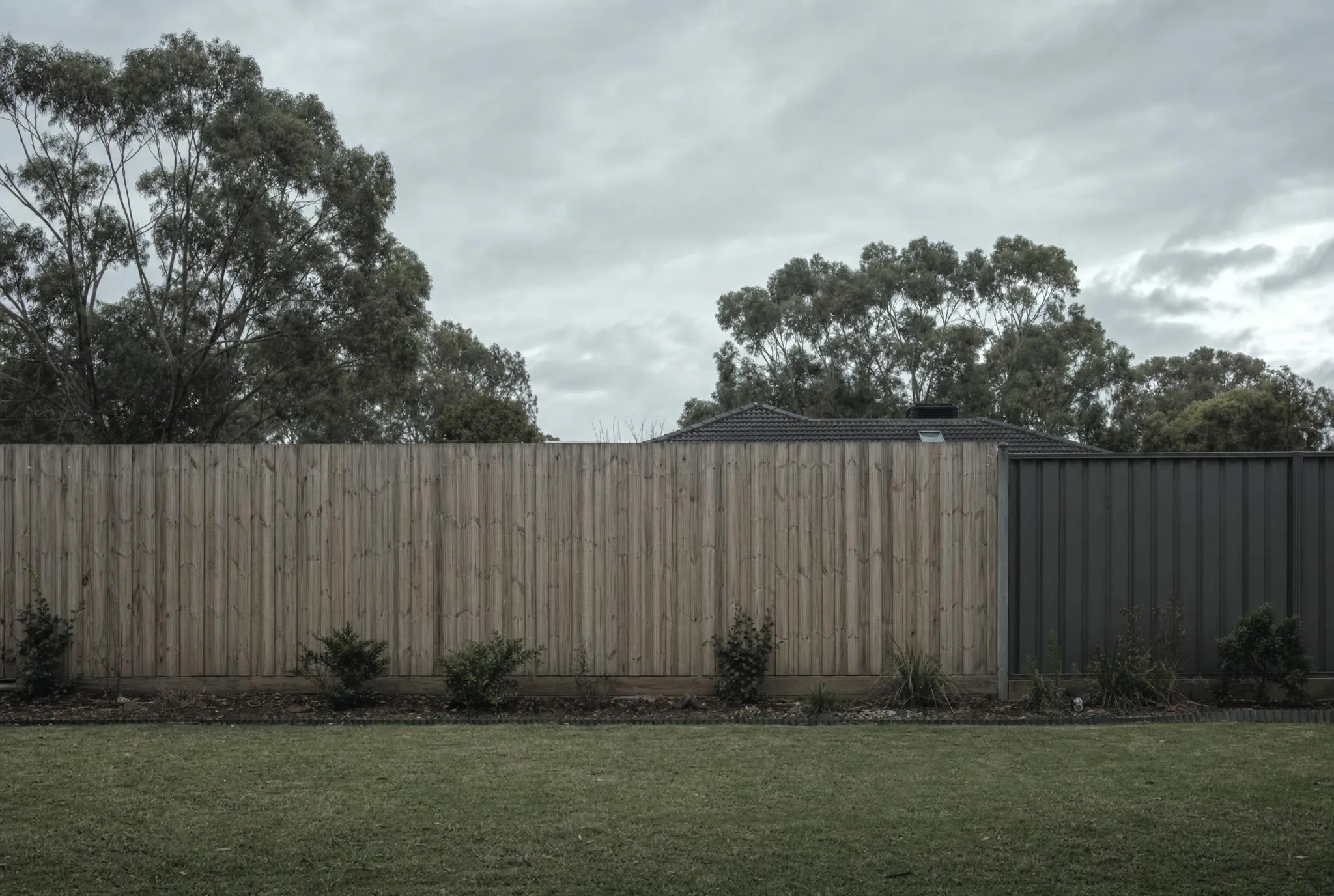
How high can a fence be in SA?
Up to 2.1 m, a standard SA fence isn't even "development", so no approval is needed. Brick fences over 1 m, corners over 1 m, and heritage or flood areas do need approval. Neighbours split the cost of a basic fence.
- Without approval
- Up to 2.1 m, measured from the lower of the two ground levels. The law leaves it out of the definition of "development" altogether 1
- Front fences
- No special street-front cap. On a corner block, though, anything over 1 m within 6 m of the corner needs approval 1
- Approval needed when
- Brick or masonry over 1 m, corner fences over 1 m, heritage areas (facing a road, or anywhere in front of the house), flood zones, co-located housing, or any fence over 2.1 m 1
- Who pays (dividing)
- Half the cost of an "adequate fence", judged by what's normal in your street rather than by a set height. Anything fancier is on you 3
- Pool fences
- At least 1.2 m — a minimum, not a maximum like the rest of this page. A pool safety fence always needs approval; see our SA pool fence page 1
- Brush fences
- The SA special. A brush fence can't be built within 3 m of a house, and it's a fire rule 1
- Your council
- SA replaced council rulebooks with one statewide Code. What changes is which zone your land is in, and whether extra rules cover it for heritage or flooding. A few inner-city zones allow up to 3.3 m 4
South Australia is generous on height, and strict on exceptions. Up to 2.1 m, a standard fence isn’t legally “development” at all, so you need no approval of any kind. 1 The catches are brick, corners, heritage areas, flood zones, and Adelaide’s much-loved brush fences.
How high can you build a fence in SA without approval?
2.1 m, measured from the lower of the two adjoining ground levels — so on a sloping boundary it’s your neighbour’s side that sets the limit, not yours. 1
South Australia gets there by a different route from every other state. Instead of exempting small fences from a permit, it leaves them out of the definition of “development” altogether. A fence under 2.1 m isn’t approved; it simply isn’t something the planning system has an opinion about. 1
So the exceptions matter more here than the height does. Fall into one and you are not over a limit — you are back inside the planning system from the start.
Sch 4, cl 4(d) Up to 2.1 m isn't "development" — with a list of exceptions Planning, Development and Infrastructure (General) Regulations 2017 (SA) 1
(d) a fence not exceeding 2.1 m in height (measured from the lower of the 2 adjoining finished ground levels), other than— (i) a fence in— (A) a designated flood zone, subzone or overlay identified under the Planning and Design Code […]; or (B) in any other zone, subzone or overlay identified under the Planning and Design Code […]; or (ii) a fence in the Historic Area Overlay under the Planning and Design Code […] that is situated on the boundary of the relevant allotment with a road (other than a laneway); or (iia) a fence in the Historic Area Overlay under the Planning and Design Code— (A) if there is no adjacent building facing the same road on to which the building faces—that is situated between the building line of the main face of a building and the road on to which the building faces; or (B) if there is an adjacent building facing the same road on to which the building faces—that is situated between a notional line drawn between the nearest front corner of each building to the other building and the road on to which the buildings face […]; or (iib) a fence on land used, or to be used, for co-located housing (the relevant land), other than a fence situated on the boundary of the relevant land and some other land; or (iii) a fence that exceeds (or would exceed) 1 m in height within 6 m of the intersection of 2 boundaries of land where those boundaries both face a road, other than where a 4 x 4 m corner cut-off has already been provided (and is to be preserved); or (iv)— (A) a masonry fence; or (B) a fence any part of which is formed from masonry (including, for example, a fence that includes masonry piers or columns), that exceeds (or would exceed) 1 m in height […]; or (v) a fence that is (or is to be) a safety fence for a swimming pool or spa pool which is approved for construction, or requires approval for construction, on or after 1 July 1993; or (vi) a brush fence that is (or is to be) closer than 3 m to an existing or proposed Class 1 or 2 building under the Building Code […]
You need approval, even under 2.1 m, if the fence is:
- masonry over 1 m, including a fence with brick piers or columns, which is the trap that catches rendered-pillar front fences;
- over 1 m within 6 m of a street corner where two boundaries face roads;
- in a heritage area, either on the boundary with a road or anywhere in front of the house (a rule added on 1 July 2026);
- in a flood area, or another zone the Code singles out;
- on land used for co-located housing, unless the fence sits on the boundary with someone else’s land (also added on 1 July 2026);
- a pool safety fence, always, as covered below; or
- a brush fence within 3 m of a house, unless the wall facing it is fire resistant to the Building Code. 1
What happens over 2.1 m in SA?
The fence becomes “development”, and it falls into SA’s three assessment categories. 2
For fences, the statewide design policy sets no fixed number. An over-threshold fence is judged on its merits. 4
PO/DTS 9.1 (Design in Urban Areas) Over the threshold: judged on merit, not a number South Australian Planning and Design Code (Version 2026.15, adopted 13 August 2026) 4
PO 9.1 Fences, walls and retaining walls of sufficient height maintain privacy and security without unreasonably impacting visual amenity and adjoining land's access to sunlight or the amenity of public places. DTS/DPF 9.1 None are applicable.
A handful of inner-city and master-planned zones are the exception. They give fence-and-retaining-wall structures their own fast-track “accepted development” class, up to a combined 3.3 m behind the front of the house. Adelaide Park Lands, Capital City, City Living and similar zones qualify. In an ordinary suburb there’s no such shortcut, and a taller fence gets judged case by case. 4
zone table — accepted development (example: Adelaide Park Lands Zone) Some inner-city zones fast-track fences to 3.3 m South Australian Planning and Design Code (Version 2026.15, adopted 13 August 2026) 4
The total combined height of the fence and retaining wall structure is less than 3.3 metres (measured from the lower of the 2 adjoining finished ground levels). The structure is located behind the building line of the associated dwelling and any dwelling on adjoining land. The structure is not located on a secondary street boundary.
Who pays for a dividing fence in SA?
Half each, of an “adequate fence”. SA decides what counts as adequate by looking at your street, not by measuring anything. 3
s 12(8)(a) "Adequate fence": your street's standard, not a height Fences Act 1975 (SA) 3
in any other case—an adequate fence is a fence that conforms with general standards of good fencing existing in the locality in which the fencing work has been or is to be performed and is adequate for the purposes of the owner against whom contribution is sought
Your neighbour’s contribution is capped at half the minimum cost of a basic fence, which is what the Act calls an “adequate fence”. If you want higher or fancier than the local standard, the difference is all yours. 3
s 12(7) Half the cost of adequate — fancier is on you Fences Act 1975 (SA) 3
If fencing work consists in the erection of an adequate fence or a fence of better quality than an adequate fence […] the contribution for which an adjoining owner is liable shall be one-half of the minimum cost of erecting an adequate fence […]
The process runs on official forms. You fill in a notice of intention and give it to your neighbour, describing describing the fence and the cost. Your neighbour has 30 days to object with a form called a cross-notice, and silence counts as agreement. If you still can’t agree, it goes to the Magistrates Court. 3
What happens if you and your neighbour disagree?
In South Australia this runs on forms and deadlines, and one of them catches people out.
First, you write to your neighbour. The form is called a notice of intention. You fill it in and give it to them. It describes the fence you want and what it will cost. 3
They then have 30 days to object. If they want to push back, they send you their own form, called a cross-notice. Here’s the trap: saying nothing counts as agreeing. If they don’t reply in time, they have agreed, and you can go ahead on the terms in your notice. 3
If they do object and you can’t work it out, it goes to the Magistrates Court. What the Court decides is money, not design. It works out what an ordinary fence for your street would cost, and your neighbour pays half of that minimum. Not half of what you actually spend. Anything fancier than the local standard is yours. 3
The planning side runs separately and doesn’t care who pays. A fence over 2.1 m, or one caught by the brick, corner, heritage or flood exceptions, gets judged on whether it suits the area rather than against a set number. 2 4
What about brush fences and pool fences in SA?
Brush fences are an Adelaide signature, and they carry SA’s most unusual fence rule. It’s about fire, not height. 1
reg 96(1)–(2) Brush fences: 3 m from houses, unless fire-rated Planning, Development and Infrastructure (General) Regulations 2017 (SA) 1
A brush fence must not be constructed closer than 3 metres to a Class 1 or 2 building under the Building Code unless any external wall of the relevant building that will, as a result of the construction of the brush fence, be closer than 3 metres to the brush fence, is fire resistant in accordance with the provisions of the Building Code relating to fire separation in respect of brush fences. (2) For the purposes of subregulation (1), the distance of 3 metres will be measured from any part of a proposed or existing brush fence and from any part of an external wall of the relevant building.
Pool safety fences sit outside the general rule completely. For pools built or approved from 1 July 1993, the safety fence always needs approval and follows its own standards. None of the numbers on this page apply to it. 1
Do councils have their own fence rules in SA?
No, and this is what makes SA different. Since 2019 to 2021 there have been no council planning rulebooks. One statewide Planning and Design Code applies everywhere, maintained centrally.
What changes from place to place is the zone your land sits in, and whether the Code puts extra rules over it. That’s what switches on the heritage and flood exceptions above, or the inner-city 3.3 m shortcut. The Code updates fortnightly, so check your address’s zone on the SA planning portal if anything above might apply to you. 4
Common questions
How high can a colorbond fence be in SA?
2.1 m without any approval. A standard non-masonry fence up to that height isn't classed as "development" at all. You measure from the lower of the two adjoining ground levels. 1
How high can a brick fence be in SA?
Watch this one. A masonry fence, or any fence with brick piers or columns, needs approval once it goes over just 1 m. That's less than half the 2.1 m you get for an ordinary fence. 1
Can I build a 2 m fence in SA?
Yes, without approval, as long as it isn't masonry over 1 m, isn't within 6 m of a street corner, and your land isn't in a heritage or flood area. Those exceptions need approval whatever the 2.1 m rule says. 1
How high can a fence be on a corner block in SA?
Near the corner itself, only 1 m. Anything taller within 6 m of where two road-facing boundaries meet needs approval, so drivers can see. The exception is where a 4 × 4 m corner cut-off has already been provided and is being kept. 1
Who pays for a boundary fence in SA?
Your neighbour's share is capped at half the minimum cost of an "adequate fence", judged by what's normal in your street. The process runs on forms. You send a notice of intention, your neighbour has 30 days to send back a cross-notice, and if you still can't agree it goes to the Magistrates Court. Want better than adequate? The extra is yours. 3
Are brush fences legal in SA?
Yes. Brush fencing is an Adelaide tradition, and it's the one fence type with its own fire rule. A brush fence can't be built within 3 m of a house, unless the wall of that house facing it is fire resistant to the Building Code standard for brush fences. Building one closer without that needs approval and a fire-safety assessment. 1
Do councils have their own fence rules in SA?
Not any more — SA replaced every council's rulebook with one statewide Planning and Design Code in 2019–2021. What changes now is which zone your land sits in, and whether the Code puts extra rules over it. Heritage and flood areas tighten things up. Since 1 July 2026, a heritage area also catches fences anywhere in front of the house, not just ones on the road boundary. And a handful of inner-city and master-planned zones allow fence-and-retaining-wall structures up to 3.3 m. 4
What is the legal height of a pool fence in SA?
A pool fence has a MINIMUM height, not a maximum: at least 1.2 m. That is the opposite of the fence rules on this page, which are ceilings. Pool barriers also have their own standard and their own approval path — see [pool fence rules in SA](/pool-fences/sa/). 1
Every source on this page
The small numbered marks throughout this page point to this list — 1 means source 1 below.
- Planning, Development and Infrastructure (General) Regulations 2017 (SA), Sch 4, cl 4(d); reg 96 — consolidation version 13.8.2026, Sch 4 as amended 1.7.2026
- Planning, Development and Infrastructure Act 2016 (SA), ss 103–104, 156 — consolidation version 30.7.2026
- Fences Act 1975 (SA), ss 4–8, 12
- South Australian Planning and Design Code (Version 2026.15, adopted 13 August 2026), General development policy — Design in Urban Areas, PO/DTS 9.1; zone accepted-development tables
Sourced from the South Australian Legislation website at 29 Aug 2026. For the latest information on South Australian Government legislation, please go to www.legislation.sa.gov.au/. Despite any headers, footers or other markings, this legislation is NOT published under the Legislation Revision and Publication Act 2002. To access legislation that is published under the Legislation Revision and Publication Act 2002, please go to www.legislation.sa.gov.au/. © Government of South Australia. Licensed under CC BY 4.0. Reproduced without changes. Creative Commons Attribution 4.0 licence.
Sourced from the South Australian Legislation website at 28 Aug 2026. For the latest information on South Australian Government legislation, please go to www.legislation.sa.gov.au/. Despite any headers, footers or other markings, this legislation is NOT published under the Legislation Revision and Publication Act 2002. To access legislation that is published under the Legislation Revision and Publication Act 2002, please go to www.legislation.sa.gov.au/. © Government of South Australia. Licensed under CC BY 4.0. Reproduced without changes. Creative Commons Attribution 4.0 licence.
Department for Housing and Urban Development, Government of South Australia, sourced on 28 Aug 2026, https://plan.sa.gov.au/__data/assets/pdf_file/0009/1642293/South-Australian-Planning-and-Design-Code-Version-2026-15-13-August-2026.pdf. Licensed under CC BY 3.0 AU. Reproduced without changes. This is not an official version. Creative Commons Attribution 4.0 licence.
Other rules for South Australia
- Are e-bikes legal in South Australia? Legal, with conditions
- Are e-scooters legal in South Australia? Legal, with conditions
- Is it legal to record a conversation in South Australia? Legal, with conditions
- What are the pool fence rules in SA? Legal, with conditions
Fence heights rules elsewhere
- Australian Capital Territory Legal, with conditions
- New South Wales Legal, with conditions
- Northern Territory Legal, with conditions
- Queensland Legal, with conditions
- Tasmania Legal, with conditions
- Victoria Legal, with conditions
- Western Australia Varies by area
Page history
Every change to this page
- 29 Aug 2026
- Corrected the list of fences that still need approval. South Australia added two exceptions on 1 July 2026: heritage-area fences in front of the house, and fences on co-located housing land. Also restored a missing condition on the brush-fence rule: the 3 m clearance does not apply if the wall facing it is fire resistant.
- 28 Aug 2026
- First published. Current to the SA Fences Act and the Planning and Design Code as at August 2026.