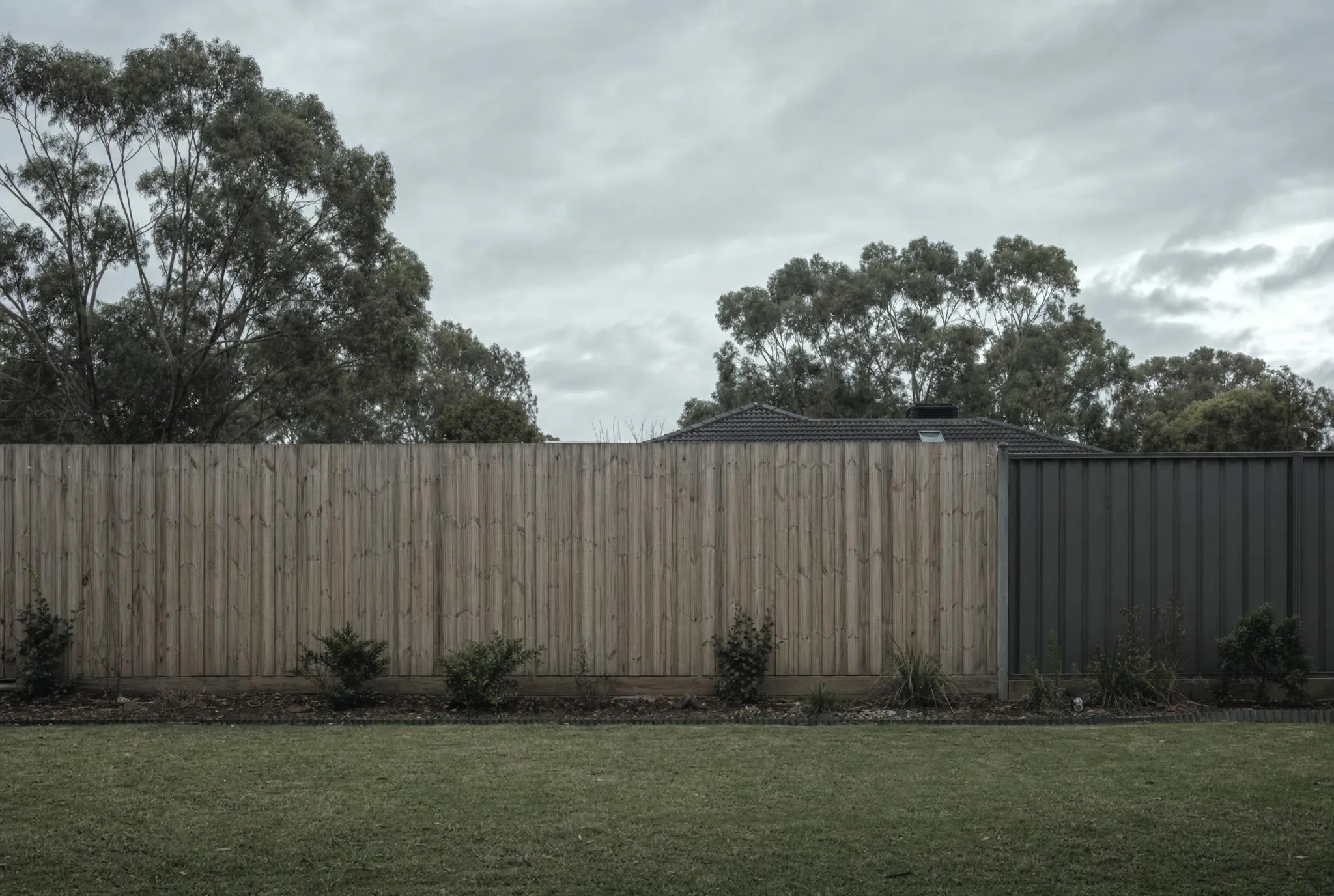
How high can a fence be in the ACT?
Side and rear fences up to 2.3 m need no approval in the ACT. Fences facing the street are mostly not allowed at all, and your block's Crown lease can set stricter rules of its own.
- Without approval
- On side and rear boundaries, panels up to 2.3 m and posts up to 2.5 m, as long as the fence stays behind the front of your house and doesn't pond or divert water 1
- Front fences
- Mostly not allowed anywhere in front of your house. The one exception is a courtyard wall, 1.5 m to 1.8 m, built to strict conditions 4
- Approval needed when
- Above the caps, in the front zone outside the courtyard-wall rules, or facing public open space above 1.85 m 1
- Who pays (dividing)
- Your neighbour's share is capped at half the cost of a "basic fence": 1.5 m timber paling in town, 1.2 m wire in rural areas. the ACT's civil tribunal decides disputes 3
- Pool fences
- At least 1.2 m — a minimum, not a maximum like the rest of this page. Separate rules and a separate approval path; see our ACT pool fence page 3
- Your lease
- The ACT quirk. Every block is Crown leasehold, and even a fence under the height caps is unlawful if it clashes with your lease 1
Canberra’s fence rules don’t work like any state’s. There are no councils, every block is Crown leasehold, and the city’s planning tradition mostly bans street-facing fences altogether. 4 That last one catches most people out, so it is worth getting to before you plan anything at the front.
How high can you build a fence in the ACT without approval?
Up to 2.3 m for the panels, and 2.5 m for the posts that hold them — the posts get the extra 200 mm because they stick up past the panel line. Mesh in industrial zones can reach 2.7 m. 1
That is the highest no-approval limit in the country, and the reason is structural: in the ACT building a fence counts as “development”, which normally needs approval from the territory planning authority. The regulation then exempts fences under those caps. 2
Two conditions ride along. The fence has to stay behind the front of your house — more on that below, because it is stricter than it sounds — and it must not pond or divert water. 1
s 7(1)(a) → sch 1, s 1.48 Side and rear fences up to 2.3 m: no approval needed Planning (Exempt Development) Regulation 2023 (ACT) 1
7(1) The following development is exempt from requiring development approval: (a) development that complies with schedule 1 (Exemptions from requirement for development approval) […] 1.48 Fences and freestanding walls generally (1) Designated development for a fence for, or freestanding wall on, a block if— (a) the fence or wall is not higher than— (i) for a mesh fence in an industrial zone—2.7m above datum ground level; or (ii) in any other case— (A) for a panel of a fence or wall—2.3m above datum ground level; or (B) for the support post or column of a fence or wall—2.5m above datum ground level; and (b) no part of the fence or wall is between a front boundary and a building line for the block; and (c) no part of the fence or wall diverts or concentrates the flow of surface water in a way that causes ponding, or onto other land.
A boundary with public open space, like a reserve or a verge, has its own lower cap of 1.85 m. There the fence has to be built as a paling fence, or to the metal-fence specification. 1
sch 1, s 1.49 Fences facing public open space: 1.85 m Planning (Exempt Development) Regulation 2023 (ACT) 1
1.49 Basic open space boundary fences — [exempt if the fence] is not higher than 1.85m above datum ground level [and is a basic paling fence or meets the metal-fence specification in subsection (2): unperforated metal, precoloured proprietary finish, capped sharp edges].
Can you have a front fence in the ACT?
Mostly, no. Unlike everywhere else in Australia, that’s on purpose. In standard residential areas, fences are not permitted in front of the house at all. The main exception is a courtyard wall: 1.5 m to 1.8 m, masonry, limited in length, with sightlines preserved. 4
controls 13–14 Street fences: mostly not allowed; courtyard walls OK Planning (Exempt Development) Single Dwelling Housing Development Control Declaration 2025 (No 2) (ACT) 4
[Control 13:] Fences or walls are not permitted forward of the building line except where: — previously approved under an estate development plan or subdivision design application. — is permitted in a relevant district single dwelling development control. — it complies with control 14. Courtyard walls. — is exempt development under the Planning Act 2023 or Planning (Exempt Development) Regulation 2023. [Control 14, courtyard walls:] a minimum height of 1.5m and a maximum height of 1.8m above datum ground level […]
Where exactly the “building line” sits is defined by the Territory Plan, and a fence can’t set it. 5
Can your lease override the fence rules in the ACT?
Yes, and there is no equivalent anywhere else in the country. Every exemption on this page, the 2.3 m included, only applies if the fence also fits your block’s Crown lease and any agreement attached to it. That condition is written into the exemption itself. 1
So treat the 2.3 m as a ceiling rather than a right. Your lease can set a lower one, and if it does, the lease wins. Before you build to the cap it is worth reading your own Crown lease — most people have never opened theirs.
sch 1, s 1.14 (Criterion 4) Your Crown lease can override all of this Planning (Exempt Development) Regulation 2023 (ACT) 1
Development must not be inconsistent with— (a) a provision of a lease to which the development relates; or (b) an agreement collateral to the grant of a lease to which the development relates.
So a lease or land-management agreement for your estate can set a stricter fence rule, and it wins. If your block is in a newer estate, check the lease before you rely on the general caps.
Who pays for a dividing fence in the ACT?
Half each, but with a cap the states don’t have. The Common Boundaries Act defines a “basic fence” exactly: 1.5 m timber paling in urban areas, 1.2 m wire in rural areas. 3
s 2 (definitions) The "basic fence" your neighbour helps pay for Common Boundaries Act 1981 (ACT) 3
basic urban fence means a timber paling fence, that is 1.5m in height above finished ground level and has— (a) reinforced spade-end precast concrete posts spaced at 2.4m; and (b) a 75mm x 50mm hardwood rail at the top and bottom of the fence that is fixed to the posts; and (c) 100mm x 12mm hardwood palings nailed to the rails. […] basic rural fence means a wire fence that is 1.2m in height above finished ground level […]
And ACAT, the ACT’s tribunal, can never order your neighbour to contribute more than half the cost of that basic fence. 3
s 10(3) ACAT caps the contribution at half a basic fence Common Boundaries Act 1981 (ACT) 3
If a party asks the ACAT to determine that a basic fence is to be erected between the parcels of land to which the application relates, the ACAT must not require the party to contribute more than ½ the cost of erecting a basic fence between the parcels.
Anything above basic, whether taller, colorbond or rendered, is a difference you pay yourself. If a fence is damaged and it’s urgent, you can repair first and ask for a contribution after, but you have to give your neighbour 14 days’ notice to discuss the cost. 3
There’s one leasehold-only power worth knowing. The planning authority can require a lessee to fence a boundary with unleased Territory land. 3
What happens if you and your neighbour disagree?
The ACT puts a firmer cap on this than any state, and it’s worth knowing before you spend money.
Disputes go to ACAT, the tribunal that handles everyday disputes in the ACT. And it can never order your neighbour to pay more than half the cost of a basic fence, which here means 1.5 m timber paling in town or 1.2 m wire in rural areas. That’s a hard ceiling, not a starting point. Whatever you build above it, from colorbond to rendered brick, is entirely your money. 3
If a fence is damaged and it can’t wait, you can repair it first and ask for a contribution afterwards. You still have to give your neighbour 14 days’ notice to talk about the cost before you start. 3
There’s one power here that no state has, and it runs the other way. Because all ACT land is leased from the government rather than owned outright, the planning authority can require you to fence a boundary with unleased government land. 3
Before any of that, check your lease. Every exemption on this page, the 2.3 m rule included, only applies if the fence fits your block’s lease and any side agreement attached to it. A stricter rule in your lease beats the general cap. 1
What about pool fences in the ACT?
Pool barriers run under the Building Act’s own safety rules, which the dividing-fence law defers to directly. None of the heights on this page apply to a pool barrier. 3
Common questions
How high can a fence be between neighbours in the ACT?
Side and rear fences up to 2.3 m, or 2.5 m for the posts, need no approval, as long as they sit behind the front of your house. Your neighbour only has to chip in for a "basic fence" though, which in urban areas means a 1.5 m timber paling fence. Anything taller or fancier is on you. 1
Can I build a 2 m fence in the ACT?
On a side or rear boundary, yes. That's under the 2.3 m no-approval cap. Facing the street, no. Fences in front of the house are mostly not allowed, apart from a compliant courtyard wall between 1.5 m and 1.8 m. 1
Can you have a front fence in Canberra?
Mostly no, and that's Canberra planning working as intended. Fences aren't permitted in front of the house in standard residential areas. There are two limited exceptions: an estate-approved fence, or a courtyard wall built to strict conditions, meaning 1.5 to 1.8 m, masonry, limited in length, with sightlines preserved. Hedges are the usual boundary treatment instead. 4
Who pays for a boundary fence in the ACT?
Half each, but only up to the cost of a "basic fence", which means 1.5 m timber paling in town and 1.2 m wire in rural areas. Disputes go to ACAT, the ACT's civil tribunal, and it can't order your neighbour to pay more than half of that basic standard. Whoever wants better pays the difference. 3
Is there a 40 cm front fence limit in the ACT?
Not in the current rules. That figure still goes around on older websites, but it comes from planning documents that have since been replaced. The rules in force today work differently. Fences generally aren't permitted in front of the house at all, apart from the courtyard-wall exception at 1.5 to 1.8 m. 4
Does my lease affect my fence in the ACT?
Yes, and this is the rule that sets the ACT apart. All land is Crown leasehold, and every exemption, the 2.3 m fence rule included, only applies if the fence fits your block's lease, and any side agreement attached to it. A stricter fence rule in your lease wins. 1
How high can a fence next to a park or reserve be in the ACT?
1.85 m. A boundary with unleased public land, like a reserve or a verge, has its own cap, and the fence has to be a basic paling fence or meet the metal-fence specification. 1
Do I need council approval for a fence in Canberra?
There's no council to ask. The ACT doesn't have any. Fence approvals are development approvals decided by the territory planning authority, and a compliant side or rear fence under the caps doesn't need one at all. 2
What is the legal height of a pool fence in the ACT?
A pool fence has a MINIMUM height, not a maximum: at least 1.2 m. That is the opposite of the fence rules on this page, which are ceilings. Pool barriers also have their own standard and their own approval path — see [pool fence rules in the ACT](/pool-fences/act/). 3
Every source on this page
The small numbered marks throughout this page point to this list — 1 means source 1 below.
- Planning (Exempt Development) Regulation 2023 (ACT), s 7; sch 1, ss 1.14, 1.48–1.49 (Republication 3)
- Planning Act 2023 (ACT), ss 14(1), 145; dictionary (Republication 11)
- Common Boundaries Act 1981 (ACT), ss 2, 6, 10(3), 23–24 (Republication 23)
- Planning (Exempt Development) Single Dwelling Housing Development Control Declaration 2025 (No 2) (ACT), controls 13–14 (NI2025-492)
- Territory Plan 2023 (ACT), dictionary — building line, front boundary, datum ground level (NI2023-540, Republication 46)
© Australian Capital Territory. Sourced from the ACT Legislation Register at 28 Aug 2026. For current law please go to https://www.legislation.act.gov.au. Licensed under CC BY 4.0. Reproduced without changes. This is not an official version. Creative Commons Attribution 4.0 licence.
Other rules for Australian Capital Territory
- Are e-bikes legal in the ACT? Legal, with conditions
- Are e-scooters legal in the ACT? Legal, with conditions
- Is it legal to record a conversation in the Australian Capital Territory? Legal, with conditions
- What are the pool fence rules in the ACT? Legal, with conditions
Fence heights rules elsewhere
- New South Wales Legal, with conditions
- Northern Territory Legal, with conditions
- Queensland Legal, with conditions
- South Australia Legal, with conditions
- Tasmania Legal, with conditions
- Victoria Legal, with conditions
- Western Australia Varies by area
Page history
Every change to this page
- 28 Aug 2026
- First published. Current to the ACT planning and building laws and the Territory Plan as at August 2026.