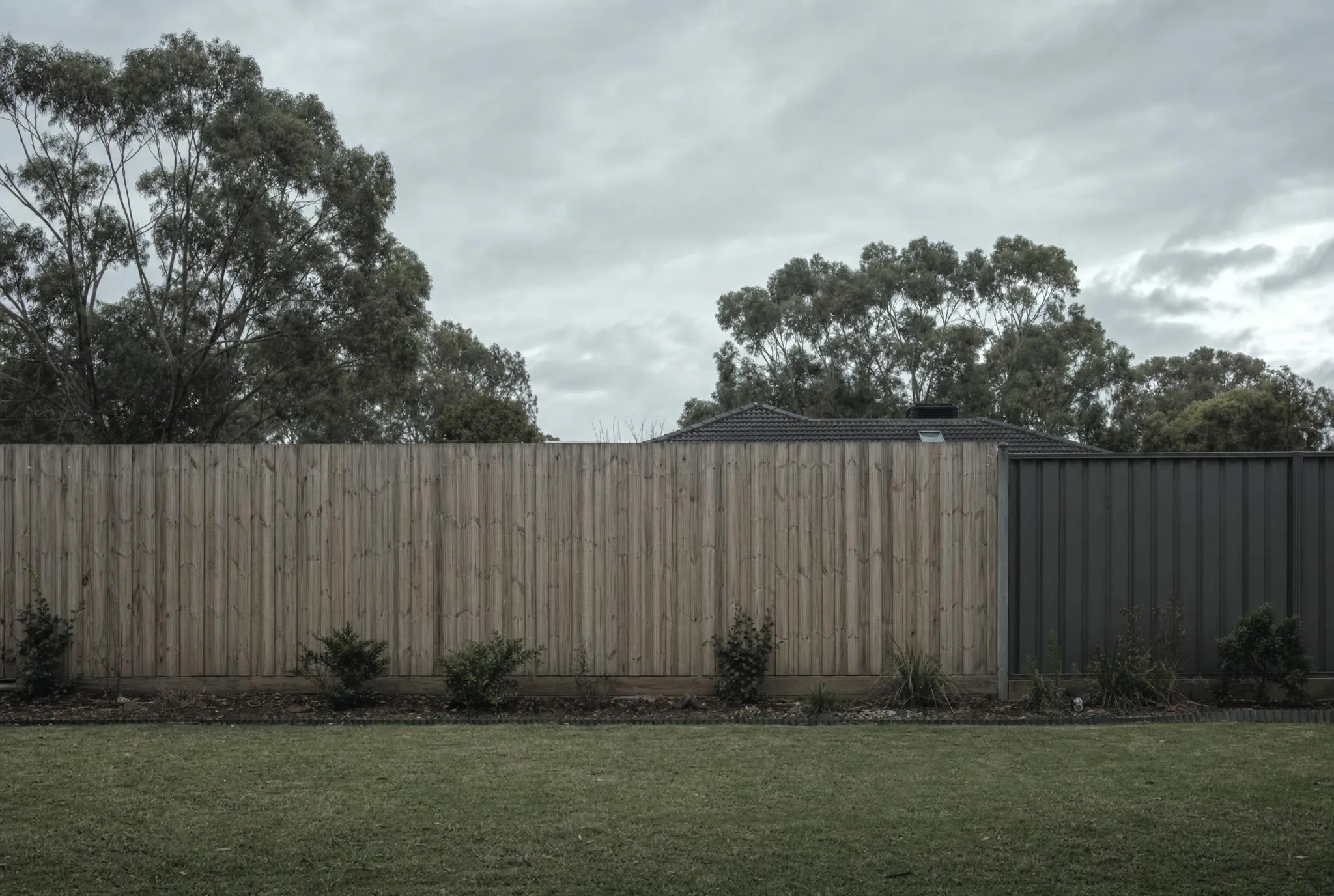
How high can a fence be in NSW?
Usually up to 1.8 m without approval in home and rural zones, and 3 m in business and industrial zones. Street-front fences are lower, at 1.2 m and mostly see-through. Heritage, flood and foreshore blocks need a check.
- Without approval
- Up to 1.8 m in home and rural zones, and 3 m in business and industrial zones, as long as your block isn't heritage, flood or foreshore listed 1
- Front fences
- Along the street it's 1.2 m, and mostly see-through above 400 mm. A solid 1.8 m front fence isn't covered by the no-approval rules 1
- Approval needed when
- Above the height caps, brick or block above 1.2 m, or your block is heritage, flood or foreshore listed 1
- Who pays (dividing)
- Half each for a basic fence. NSW sets no fixed height for "basic", so if you and your neighbour disagree, a court or tribunal decides what's reasonable for your street 2
- Pool fences
- At least 1.2 m — a minimum, not a maximum like the rest of this page. The pool owner pays for the pool-compliance part; see our NSW pool fence page 3
- Retaining walls
- In law these aren't fences, so the neighbour cost-sharing rules don't apply to them 2
- Your council
- A court weighs your council's fence policy in a neighbour dispute. Unusual blocks should check the local planning rules 2
NSW gives different answers for different kinds of land. 1.8 m in home and rural zones. 3 m around business and industrial sites. And a lower, see-through standard along street fronts. 1 NSW never fixes a height your neighbour has to help pay for. If the two of you can’t agree what a reasonable fence is, the Local Court or NCAT settles it, weighing the fence that was already there and what’s normal in your street. 2
How high can you build a fence in NSW without approval?
Up to 1.8 m in home and rural zones, measured from the ground as it already is. 1
There’s a second limit inside that one, and it catches people out. Only the first 1.2 m can be solid masonry — brick, block or stone. The remaining 0.6 m has to be something else, timber or metal or lattice. So a full-height brick fence at 1.8 m is not on the no-approval list, even though 1.8 m is. Electric fences and barbed wire are out entirely. 1
The law gets there in two steps. NSW planning law has a category called “exempt development”, which is minor work needing no approval at all. 5
s 1.6(1) "Exempt development" needs no approval Environmental Planning and Assessment Act 1979 (NSW) 5
The carrying out of exempt development does not require— (a) development consent under Part 4, or (b) environmental impact assessment under Division 5.1, or (c) State significant infrastructure approval under Division 5.2, or (d) a certificate under Part 6 (Building and subdivision certification).
To build without approval your fence has to clear three hurdles. It has to be a kind of fence the exempt-development rules actually list. It has to stay inside the height and materials limits for your zone, which the next section sets out. And it has to be structurally sound and comply with the Building Code. 1
cll 1.15(1), 1.16(1) When a fence qualifies — and the extra conditions State Environmental Planning Policy (Exempt and Complying Development Codes) 2008 (NSW) 1
1.15 What development is exempt development? (1) Development is exempt development for the purposes of this Policy if the development— (a) is specified in an exempt development code, and (b) meets the standards specified for the development, and (c) complies with the requirements of this Division for exempt development. […] 1.16 General requirements for exempt development (1) To be exempt development for the purposes of this Policy, the development— (a) must meet the relevant deemed-to-satisfy provisions of the Building Code of Australia, or if there are no such relevant provisions, must be structurally adequate, and (b) must not, if it relates to an existing building, cause the building to contravene the Building Code of Australia […]
Here are the standards themselves for home zones.
cll 2.33–2.34(1) Home-zone fences: the 1.8 m standard State Environmental Planning Policy (Exempt and Complying Development Codes) 2008 (NSW) 1
2.33 Specified development — The construction or installation of a fence on land within Zone R1, R2, R3, R4 or RU5 is development specified for this code if it is not constructed or installed—(a) on a lot, or along a common boundary of a lot, that contains a heritage item or a draft heritage item, or (b) along the boundary of, or within the setback area of, a primary or secondary road within a heritage conservation area or draft heritage conservation area, or (c) on a flood control lot, or (d) on land that is identified as being in a foreshore area. […] 2.34 Development standards (1) The standards specified for development specified in clause 2.33 are that the development must—(a) not be higher than 1.8m above ground level (existing), and (b) not be of masonry construction to a height that is more than 1.2m above ground level (existing), and […] (g) not be an electrical fence or use barbed wire.
Some blocks are shut out of the no-approval pathway altogether: land with a heritage item on it, a flood control lot, or land in a foreshore area. On those blocks the rules on this page don’t apply, and you should talk to your council before you build anything. 1
Around business and industrial sites the cap is higher, at 3 m — with a catch. Where that fence faces homes or a road, the upper part has to be at least 75% open. In practice that means the top of a 3 m fence is mesh or palisade, not solid sheeting, so it doesn’t wall off the street. 1
cl 2.38(1)–(2) Business & industrial fences: 3 m, with see-through rules State Environmental Planning Policy (Exempt and Complying Development Codes) 2008 (NSW) 1
(1) The standards specified for that development are that the development must—(a) not be higher than 3m above ground level (existing), and (b) not be of masonry construction to a height that is more than 1.2m above ground level (existing) […] (2) Despite subclause (1)—(a) any fence located along the boundary of a site that adjoins land within a residential zone must be open for at least 75% of the area of the fence that is more than 1.8m above ground level (existing), and (b) any fence located on the boundary of, or within the setback area of, a road must be open for at least 75% of the area of the fence that is more than 1.2m above ground level (existing).
How high can a front fence be in NSW?
1.2 m along the street, and mostly open above 400 mm. That’s the rule for any fence along a primary or secondary road in a home zone, or set back from one. Solid panels above 400 mm can each be at most 350 mm wide, with gaps between them. A solid 1.8 m wall at the street front isn’t something the no-approval rules allow. 1
cl 2.34(2), (5) Street fronts: 1.2 m, mostly open; slopes step higher State Environmental Planning Policy (Exempt and Complying Development Codes) 2008 (NSW) 1
(2) Despite subclause (1), any fence located along the boundary of, or within the setback area to, a primary or secondary road must—(a) not be more than 1.2m above ground level (existing), and (b) be open for at least 20% of the area of the fence that is more than 400mm above ground level (existing), with any individual solid element of the fence above this height being no more than 350mm in width with a minimum aperture of 25mm. […] (5) Despite subclauses (1) and (2), if the fence is erected on a sloping site and stepped to accommodate the fall in the land—(a) a fence that is required to be not more than 1.2m above ground level (existing), must not be more than 1.5m above ground level (existing) at each step, and (b) a fence that is required to be not more than 1.8m above ground level (existing), must not be more than 2.2m above ground level (existing) at each step.
Sloping block? A fence stepped down the hill gets extra room. Up to 2.2 m at each step for a normal boundary fence, and up to 1.5 m at each step where the 1.2 m street-front cap applies. 1
Who pays for a dividing fence in NSW?
Half each, for a basic fence. The Dividing Fences Act calls it a “sufficient dividing fence”, and here’s the part that catches people out. NSW never says how high that fence is, or what it’s made of. If you and your neighbour can’t agree on what counts as basic for your street, the Local Court or NCAT decides. They weigh up the existing fence, privacy, what’s usual in your area, and your council’s fence policy. 2
s 7(1)–(2) Half each for a basic fence — extras are yours Dividing Fences Act 1991 (NSW) 2
(1) Adjoining owners are liable to contribute in equal proportions to the carrying out of fencing work in respect of a dividing fence of a standard not greater than the standard for a sufficient dividing fence. (2) An adjoining owner who desires to carry out fencing work involving a dividing fence of a standard greater than the standard for a sufficient dividing fence is liable for the fencing work to the extent to which it exceeds the standard for a sufficient dividing fence.
The process is the same as everywhere else in Australia. Put it in writing first. You give your neighbour a form called a fencing notice, saying what you propose, where, and what it costs. If you can’t agree within a month, either of you can apply to the Local Court, or to NCAT, the NSW civil tribunal. There are free Community Justice Centres for mediation along the way. 2
ss 11(1), 12(2) The notice first — then the Local Court or NCAT Dividing Fences Act 1991 (NSW) 2
11(1) An adjoining owner may require the other adjoining owner to contribute, under this Act, to the carrying out of fencing work by serving a notice in writing to that effect on the other owner. […] 12(2) If adjoining owners do not agree (within 1 month after one of them has served a notice under section 11) as to the fencing work to be carried out, either owner may apply to the Local Court or the Civil and Administrative Tribunal for an order determining the manner in which the fencing work (if any) is to be carried out.
Want something taller or fancier than the basic standard? You pay the difference, and that part is fixed. 2
What happens if you and your neighbour disagree?
Fence arguments follow the path the Act lays down. Here’s how it goes.
First, you write to your neighbour. There’s a form for it, called a fencing notice. You fill it in and give it to them. It sets out the fence you want, where it goes, and what it will cost. 2
Then you have a month to sort it out. If you can’t, either of you can take it to the Local Court, or to NCAT, which is the tribunal that handles everyday disputes in NSW. Before that, there are free Community Justice Centres that will sit down with you both and try to find middle ground. 2
Here’s the part that catches people. NSW never says how high a basic fence should be. So there is no number for anyone to check your fence against. They look at the fence that’s already there, your privacy, what’s normal in your street, and what your council’s fence policy says. Two neighbours in different suburbs can get different answers about identical fences. 2
Want something better than basic? Build it. You just pay the difference between the basic fence and the one you chose. 2
One rule beats all of that. If the fence work is needed because of a pool, the pool owner pays for that part, and nobody splits it half each. 3
What is the legal height of a pool fence in NSW?
We can’t give you a number for pool fences, and that’s on purpose. The fence rules hand pool barriers over to the pool-safety system entirely. The Swimming Pools Act requires a child-resistant barrier built to “the standards prescribed by the regulations”, so the technical standard, heights included, lives in the pool regulations rather than here. 3
s 7(1) Pool fences: the standard lives in the pool regulations Swimming Pools Act 1992 (NSW) 3
The owner of the premises on which a swimming pool is situated must ensure that the swimming pool is at all times surrounded by a child-resistant barrier—(a) that separates the swimming pool from any residential building situated on the premises and from any place (whether public or private) adjoining the premises, and (b) that is designed, constructed, installed and maintained in accordance with the standards prescribed by the regulations. Maximum penalty—50 penalty units.
Two things the rules do settle plainly. Skipping a compliant pool barrier costs $550 on the spot, with a court maximum of $5,500. 6 Say a boundary fence has to be upgraded because of a pool. The pool owner pays for that part, not half each. 3
s 33(1)–(2) Pool-related fence costs: the pool owner pays Swimming Pools Act 1992 (NSW) 3
(1) The expenses of constructing, altering, repairing, replacing or maintaining a dividing fence are, to the extent to which they are attributable to work done for the purpose of complying with the requirements of this Act in respect of a swimming pool, to be borne—(a) by the owner of the premises on which the swimming pool is situated, or (b) if swimming pools are situated on more than one of the premises bounded by the dividing fence—by the owners of each of those premises in appropriate proportions. (2) This section prevails over any provision of the Dividing Fences Act 1991 to the contrary.
What about rural properties and retaining walls in NSW?
Rural fences keep the 1.8 m cap but change character. The no-approval standard expects post-and-wire or post-and-rail construction, with masonry only right at the property entrance. Unlike home zones, electric fencing is allowed, as long as it’s built to the electric-fence standard, AS/NZS 3014:2003. 1
cl 2.36(1) Rural fences: 1.8 m post-and-wire; electric OK State Environmental Planning Policy (Exempt and Complying Development Codes) 2008 (NSW) 1
The standards specified for that development are that the development must—(a) not be higher than 1.8m above ground level (existing), and […] (c) be constructed using post and wire or post and rail, and […] (h) if it is electrical fencing—be constructed in accordance with AS/NZS 3014:2003, Electrical installations – Electric fences […]
A retaining wall isn’t a fence in law. The Dividing Fences Act says so directly, which means the half-each cost-sharing rules don’t apply to retaining walls. Their approval rules are a separate question, and this page doesn’t cover them. 2
What it costs to get it wrong
| Offence | Penalty | Source |
|---|---|---|
| Pool without a compliant child-resistant barrier (the fence side of pool safety) | $550 on the spot; court maximum $5,500 (50 penalty units at $110 each) | 6 |
Common questions
How high can a fence be between neighbours in NSW?
You can usually build up to 1.8 m in home and rural zones without approval. NSW sets no height your neighbour has to chip in for, though. If you disagree about what a fair basic fence is, a court or tribunal decides, looking at your street, your privacy needs and the local council's fence policy. 2
Can I build a 2 m fence in NSW?
Not under the no-approval rules. The cap in home and rural zones is 1.8 m. The only place you'll see more than 2 m is on sloping blocks, where a stepped fence can reach 2.2 m at each step. Otherwise a 2 m fence means talking to your council. 1
How high can a colorbond fence be in NSW?
1.8 m in home zones, the same as any other fence. Metal fences have to be low-reflective, factory pre-coloured material. The 1.2 m brick-and-block limit doesn't apply to colorbond. 1
Do I need council approval for a 1.8 m fence in NSW?
Usually not, in home and rural zones. The conditions are that your block isn't heritage-listed, a flood control lot or in a foreshore area, and that the fence isn't along the street front. Street-front fences are capped at 1.2 m and have to be mostly see-through. 1
How high can a fence be on a sloping block in NSW?
A fence stepped down a slope can be up to 2.2 m tall at each step. For street-front fences, which are normally capped at 1.2 m, it's 1.5 m at each step. 1
Who pays for a boundary fence in NSW?
Half each, for a basic fence. Whoever wants something better pays the extra. Serve a written notice on your neighbour saying what you propose and what it costs. If you can't agree within a month, either of you can go to the Local Court or to NCAT, the NSW civil tribunal. 2
What is the legal height of a pool fence in NSW?
A pool fence has a MINIMUM height, not a maximum: at least 1.2 m. That is the opposite of the fence rules on this page, which are ceilings. Pool barriers also have their own standard and their own approval path — see [pool fence rules in NSW](/pool-fences/nsw/). 3
Can you have barbed wire or an electric fence in NSW?
Not in home, business or industrial zones. The no-approval rules there say the fence can't be electric or use barbed wire. On rural land you can have electric fencing, as long as it's built to the electric-fence standard, AS/NZS 3014:2003. 1
Every source on this page
The small numbered marks throughout this page point to this list — 1 means source 1 below.
- State Environmental Planning Policy (Exempt and Complying Development Codes) 2008 (NSW), cll 1.15–1.16, 2.33–2.38
- Dividing Fences Act 1991 (NSW), ss 3, 4, 6–8, 11, 12
- Swimming Pools Act 1992 (NSW), ss 3, 7, 32, 33
- Crimes (Sentencing Procedure) Act 1999 (NSW), s 17 — penalty unit $110
- Environmental Planning and Assessment Act 1979 (NSW), ss 1.4, 1.6
- Swimming Pools Regulation 2018 (NSW), Sch 1
Sourced from the New South Wales Legislation website at 28 Aug 2026. For the latest information on New South Wales Government legislation please go to https://www.legislation.nsw.gov.au. © State of New South Wales. Licensed under CC BY 4.0. Reproduced without changes. This is not an official version. Creative Commons Attribution 4.0 licence.
Other rules for New South Wales
- Are e-bikes legal in NSW? Legal, with conditions
- Are e-scooters legal in NSW? Illegal
- Is it legal to record a conversation in New South Wales? Legal, with conditions
- What are the pool fence rules in NSW? Legal, with conditions
Fence heights rules elsewhere
- Australian Capital Territory Legal, with conditions
- Northern Territory Legal, with conditions
- Queensland Legal, with conditions
- South Australia Legal, with conditions
- Tasmania Legal, with conditions
- Victoria Legal, with conditions
- Western Australia Varies by area
Page history
Every change to this page
- 28 Aug 2026
- First published. Current to the NSW planning rules for fences, the Dividing Fences Act and the Swimming Pools Act as at August 2026.