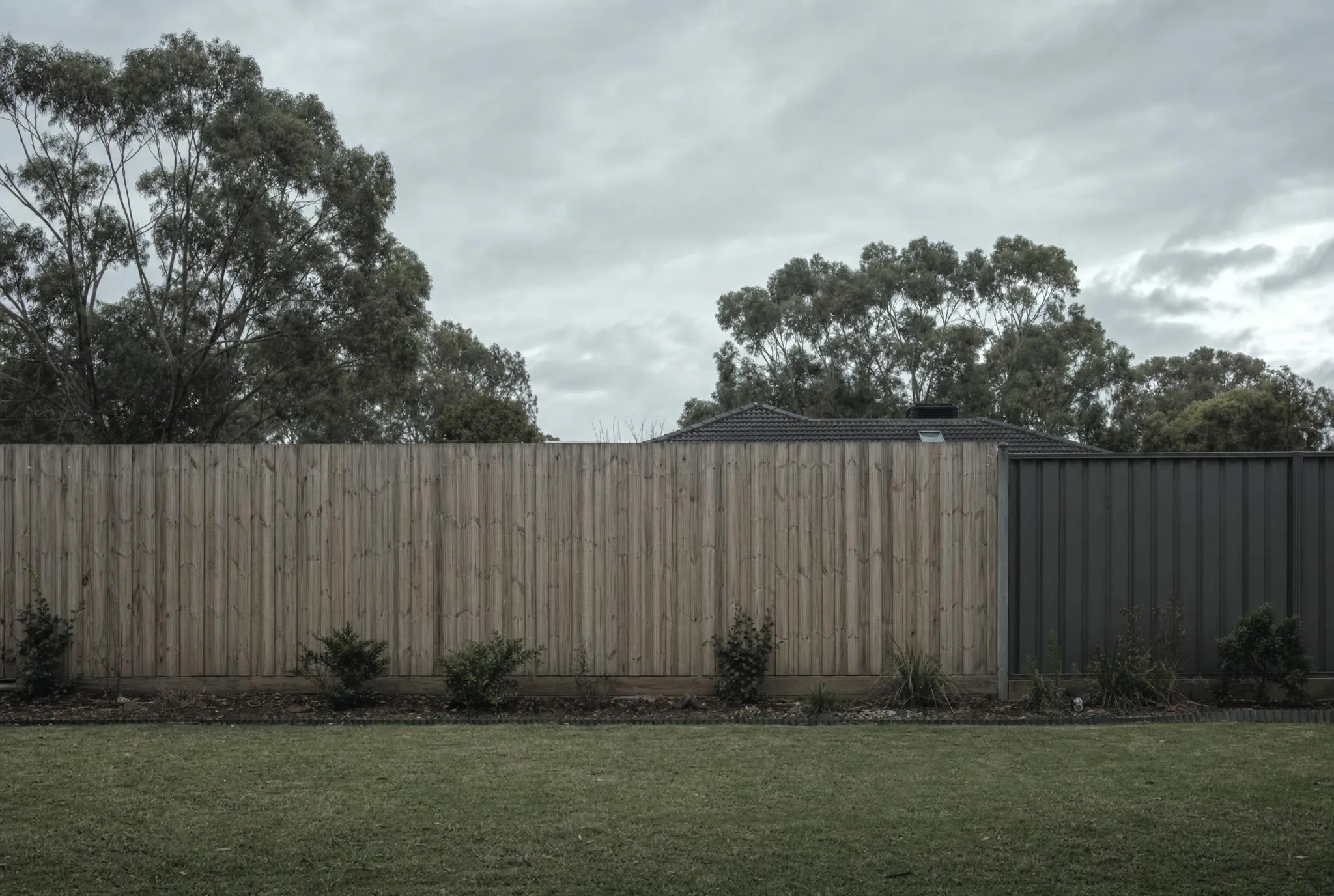
How high can a fence be in Australia?
There's no single Australian answer. Every state and territory makes its own rules, and they really do differ. Compare them below, or go straight to your state.
| Where | The answer | Without approval | Front fences | Approval needed when | Who pays (dividing) |
|---|---|---|---|---|---|
| New South Wales | Up to 1.8 m | 1.8 m (3 m industrial) | 1.2 m, mostly open | Over the caps + special lots | Half each, no set height |
| Victoria | Up to 2 m | 2 m (1.5 m near street) | 1.5–2 m (zone can vary) | Over the caps | Half each, no set height |
| Queensland | Up to 2 m | 2 m | 2 m (1 m on corners) | Over 2 m | Half each, up to 1.8 m |
| Western Australia | Council sets it | Local law (else 1.8 m) | 1.8 m, open above 1.2 m | Outside local law/caps | Half each, per local law |
| South Australia | Up to 2.1 m | 2.1 m | 2.1 m (1 m corners) | Masonry >1 m; over 2.1 m | Half of adequate |
| Tasmania | Up to 2.1 m | 2.1 m (1.2 m brick) | 1.2 m solid / 1.8 m open | Over caps: surveyor | Shared, no set height |
| Australian Capital Territory | Up to 2.3 m | 2.3 m (side/rear) | Mostly not allowed | Over caps / front zone | Half of a basic fence |
| Northern Territory | No set limit | 1 m / see-through | No cap (houses) | Over 1 m, solid | Half each, no set height |
Every cell comes from that state's own page, where the same fact is cited to the legislation it comes from.
Each state and territory in a sentence
New South Wales
Usually up to 1.8 m without approval in home and rural zones, and 3 m in business and industrial zones. Street-front fences are lower, at 1.2 m and mostly see-through. Heritage, flood and foreshore blocks need a check. Full rules →
Victoria
Up to 2 m, a Victorian fence normally needs no permit. Near the street the caps drop to 1.5 m, or 1.2 m for brick. What your neighbour has to chip in for is decided case by case, with no set height. Full rules →
Queensland
Up to 2 m, you can usually build a fence in Queensland without any approval. Taller than that needs building approval. Your neighbour only has to help pay for a basic fence up to 1.8 m. Full rules →
Western Australia
WA has no single fence-height number. Your council's fencing local law sets the standard, commonly 1.8 m. Without one, permit-free fences cap at 1.8 m, or 0.75 m for brick. Front fences have their own rules. Full rules →
South Australia
Up to 2.1 m, a standard SA fence isn't even "development", so no approval is needed. Brick fences over 1 m, corners over 1 m, and heritage or flood areas do need approval. Neighbours split the cost of a basic fence. Full rules →
Tasmania
Most Tasmanian boundary fences can reach 2.1 m with no approvals, though brick stops at 1.2 m. Near the street it's 1.2 m solid, or 1.8 m see-through. Two separate rulebooks apply: building and planning. Full rules →
Australian Capital Territory
Side and rear fences up to 2.3 m need no approval in the ACT. Fences facing the street are mostly not allowed at all, and your block's Crown lease can set stricter rules of its own. Full rules →
Northern Territory
For an ordinary house, NT law sets no maximum fence height. Any fence over 1 m that blocks wind needs a building permit and cyclone-rated engineering. Darwin has its own rule about barbed wire. Full rules →
Every change across these pages
- 3 Sept 2026
- VIC: Re-checked against Victoria's 1 September 2026 consolidations: Building Regulations 2018 version 031 and Building Act 1993 version 150, replacing versions 030 and 149. Every provision quoted on this page is present in the new version unchanged, so no wording here changed — only the version the page points at.
- 3 Sept 2026
- QLD: Re-checked the Queensland Housing Code. It is no longer pending: the Building Regulation 2021 reprint current from 14 August 2026 carries it and the register states every provision has commenced. The page had said it was proposed to start on 1 September 2026 subject to approval. The 2 m limit is unchanged, and each council keeps the old settings until its scheme is amended or 1 September 2029.
- 29 Aug 2026
- QLD: Corrected the start date for the new Queensland Housing Code. It is proposed to start on 1 September 2026 but still needs approval, so this page no longer treats the date as settled. The 2 m limit does not change under it.
- 29 Aug 2026
- SA: Corrected the list of fences that still need approval. South Australia added two exceptions on 1 July 2026: heritage-area fences in front of the house, and fences on co-located housing land. Also restored a missing condition on the brush-fence rule: the 3 m clearance does not apply if the wall facing it is fire resistant.
- 28 Aug 2026
- NSW: First published. Current to the NSW planning rules for fences, the Dividing Fences Act and the Swimming Pools Act as at August 2026.
- 28 Aug 2026
- VIC: First published. Current to the Victorian Building Regulations as at 1 July 2026, the Building Act and the Fences Act.
- 28 Aug 2026
- QLD: First published, during the changeover to the new Queensland Housing Code. The rules shown are the 2010 standards, which still apply.
- 28 Aug 2026
- WA: First published. Current to the WA Building Act and Regulations, the Dividing Fences Act and the residential design codes as at August 2026.
- 28 Aug 2026
- SA: First published. Current to the SA Fences Act and the Planning and Design Code as at August 2026.
- 28 Aug 2026
- TAS: First published. Current to the Tasmanian Building Act, the Boundary Fences Act and version 16.1 of the State Planning Provisions.
- 28 Aug 2026
- ACT: First published. Current to the ACT planning and building laws and the Territory Plan as at August 2026.
- 28 Aug 2026
- NT: First published. Current to the NT Building Act and Regulations, the Fences Act, the Planning Scheme and the City of Darwin By-laws as at August 2026.