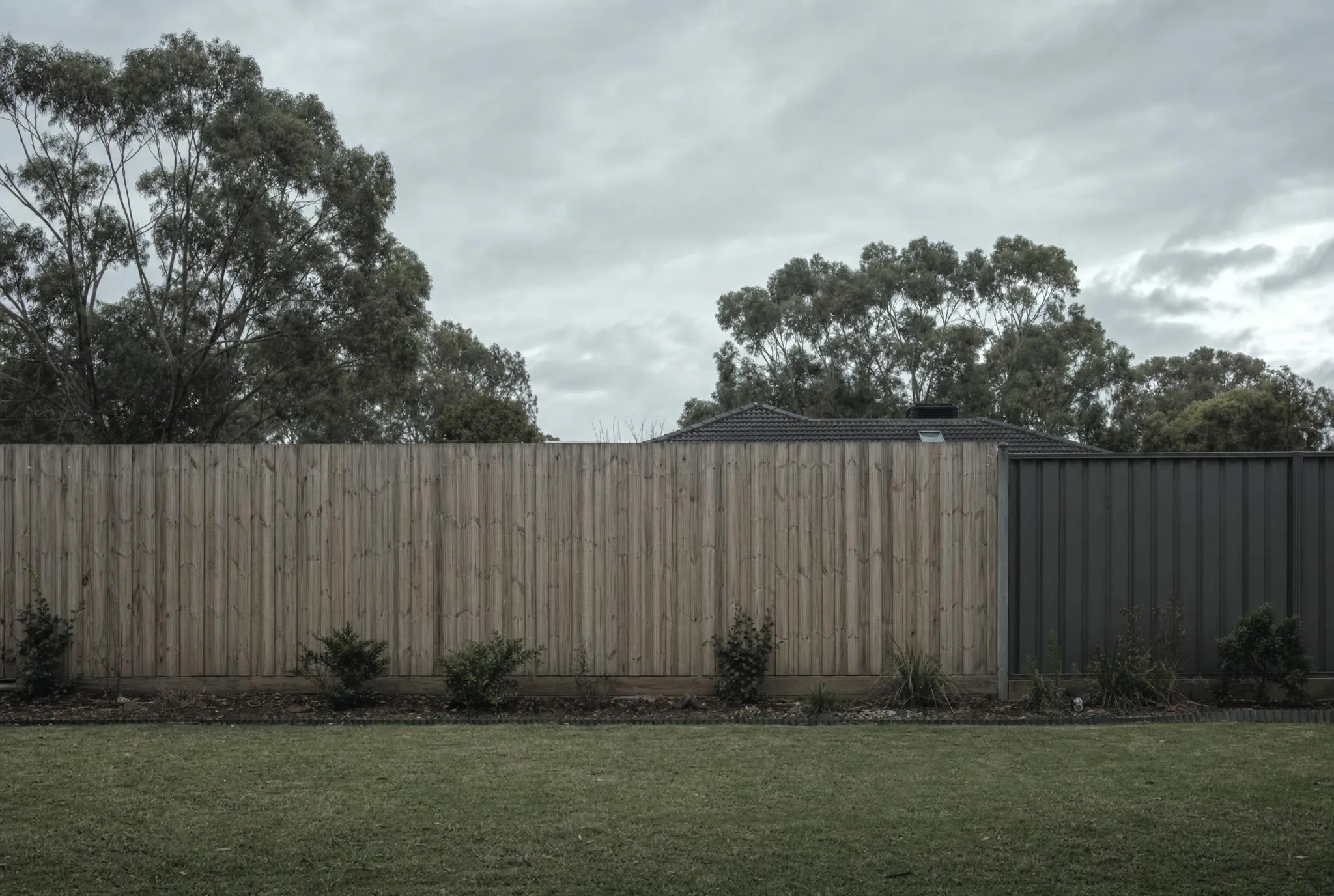
How high can a fence be in Victoria?
Up to 2 m, a Victorian fence normally needs no permit. Near the street the caps drop to 1.5 m, or 1.2 m for brick. What your neighbour has to chip in for is decided case by case, with no set height.
- Without approval
- Up to 2 m, but lower near the street. It's 1.5 m within 3 m of the street, 1.2 m if brick or concrete, and 1 m near street corners 1
- Front fences
- With a permit you get up to 2 m on a declared road and 1.5 m on other streets. Your zone's planning schedule can set different numbers 1
- Approval needed when
- Above the no-permit caps you need a building permit. A non-standard design also means your building surveyor has to get your council's view first, which is called "report and consent" 2
- Who pays (dividing)
- Half each for a "sufficient dividing fence", with no set height. If you disagree, the Magistrates' Court decides using a ten-factor test 3
- Pool fences
- At least 1.2 m, or 1.5 m for a pool from before April 1991 — a minimum, not a maximum like the rest of this page. See our Victorian pool fence page 1
- Boundary fences
- A fence right on the side or rear boundary can go higher, up to 3 m average and 3.6 m maximum, along a limited length 1
- Your council
- Your council gives the "report and consent" for non-standard fences. Its planning scheme can add its own fence rules on top, especially in heritage areas 4
Victoria’s fence rules work like a ladder. 2 m in most of the yard with no permit. Lower near the street. And higher on the boundary itself. Your council can vary the street numbers through its planning scheme. 1 When the argument is with your neighbour rather than the council, Victoria sets no fence height at all. 3
How high can you build a fence in Victoria without a permit?
Up to 2 m through most of the yard. But the number drops the closer you get to the street, and all of the limits have to be met at once — clearing one doesn’t buy you the others. 1
- 2 m anywhere that isn’t near the street
- 1.5 m within 3 m of the street, or 1.2 m if it’s brick or concrete
- 1 m near a street corner
The reason it works as a set of exceptions rather than a permission is that Victoria starts from the opposite end: all building work needs a permit, and the regulations then carve fences out. 2
Sch 3, item 10 The no-permit fence: 2 m, lower near the street Building Regulations 2018 (Vic) 1
A fence (other than a fence forming part of a safety barrier for a swimming pool or spa or a fence forming part of an outdoor play space associated with a children's service)— (a) not exceeding 2 m in height; and (b) not exceeding 1.5 m in height when within 3 m of a street alignment (other than a lane, footway, alley or right of way) and not constructed of masonry, concrete or similar material; and (c) not exceeding 1.2 m in height when within 3 m of such a street alignment and constructed of masonry, concrete or similar material; and (d) not exceeding 1 m in height above the footpath when within 9 m of a point of intersection of street alignments — [exemption column:] All Parts except regulation 89(1) and Schedule 6.
One catch survives even a fence that clears all of those. If your zone’s planning schedule sets its own front-fence height, that number still applies — the exemption is written to leave room for it. 1
So the state number is a starting point, not the answer, and there is no way to know yours without looking. It is a per-suburb lookup in your council’s planning scheme, and it only ever affects the front.
How high can a front fence be in Victoria?
Without a permit, 1.5 m within 3 m of the street, or 1.2 m for brick. With a building permit the caps rise to 2 m on a declared road and 1.5 m on any other street. A design above those needs your council’s “report and consent” before the permit can be issued. 1
reg 89(2)–(3) + Table 89 Front fences on the permit route: 2 m / 1.5 m Building Regulations 2018 (Vic) 1
(2) If subregulation (1) does not apply, the height of a fence, or part of a fence, that is within 3 m of the street alignment at the front of an allotment must not exceed the relevant maximum height specified in Table 89. [Table 89: a declared road — 2 m; any other street — 1.5 m.] (3) The report and consent of the relevant council must be obtained to an application for a building permit in relation to a design that does not comply with this regulation.
That report-and-consent step isn’t a separate council permit. The council advises the building surveyor, who makes the decision. It kicks in automatically whenever a fence design breaks one of the siting rules. 1
How high can a fence on the boundary be in Victoria?
This is where Victoria stands out. A fence on the side or rear boundary itself can go past 2 m, up to a 3 m average and a 3.6 m maximum. It only applies along a limited length, and never on the street side. 1
reg 91(1)–(2) Boundary fences can go higher — within limits Building Regulations 2018 (Vic) 1
(1) Despite regulation 90, one or more fences that are more than 2 m in height may be constructed on, or within 150 mm of, a side or rear boundary (other than a side or rear street alignment) if the total length […] does not exceed the greater of— (a) 10 m plus 25% of the remaining length of the boundary of an adjoining allotment; (b) the length of any wall or carport constructed on an adjoining allotment that is on or within 150 mm of the boundary […] (2) A fence constructed on or within 150 mm of a side or rear boundary […] must not exceed— (a) an average height of 3 m; and (b) a maximum height of 3.6 m along the boundary.
Fences over 2 m also have to look after the neighbours. You have to leave gaps that protect daylight to a neighbour’s living-room windows, north-facing sunlight, and at least five hours of sun on their outdoor space. 1 A design that doesn’t comply goes through the council report-and-consent step, like any other non-standard fence. 1
Who pays for a dividing fence in Victoria?
You each pay half. Not half of whatever your neighbour wants, though — half of a basic fence that suits the two properties. The Act calls that a “sufficient dividing fence”. If you want better than basic, the difference is yours. 3
So what counts as basic? Victoria doesn’t put a number on it. The Act lists ten things to weigh up. In most suburbs four of them decide it: the fence that’s already there, what each property is used for, privacy, and what’s normal in your street. Council policy and the building rules count too. 3
s 6(1)-(2) What counts as a basic fence, and who decides Fences Act 1968 (Vic) 3
(1) For the purposes of this Act, in determining whether a dividing fence is a sufficient dividing fence regard must be had to the following— (a) the existing dividing fence (if any); (b) the purposes for which the owners of the adjoining lands use or intend the lands to be used; (c) the reasonable privacy concerns of the owners of the adjoining lands; (d) the types of dividing fences used in the locality; (e) any policy or code relating to dividing fences adopted by the municipal council […]; (f) any relevant planning instruments […]; (g) any relevant building laws […]; (h) the existence of any agreements or covenants […]; (i) the duties (if any) […] to control pest animals; (j) the need for a dividing fence, having regard to any existing waterway or obstruction […]. (2) Despite subsection (1), if different standards of dividing fence are required for different purposes, a sufficient dividing fence for those lands is the lesser standard of fence.
One line in there is worth knowing about. If the two properties would need different standards of fence, the lesser standard is the one you both pay half of. Your neighbour can’t bill you for half a premium fence because their side of the boundary calls for one. 3
ss 7(1), 8(1) Half each for a basic fence, extras are yours Fences Act 1968 (Vic) 3
7(1) If there is no dividing fence between adjoining lands, the owners […] are liable to contribute in equal proportions to fencing works and any subsidiary works for the construction of a sufficient dividing fence […] 8(1) If […] an owner of one of the adjoining lands requires a fence that is greater than the standard for a sufficient dividing fence, that owner is liable for the entire cost […] so far as they exceed the standard for a sufficient dividing fence.
The process starts with a written fencing notice to your neighbour, proposing the works and the contribution. If you can’t agree, the dispute goes to the Magistrates’ Court. Not VCAT, which surprises a lot of Victorians. The Court can settle everything from the boundary line to who pays what. 3
s 30C(1) Fence disputes go to the Magistrates' Court Fences Act 1968 (Vic) 3
The Magistrates' Court may make an order in relation to any one or more of the following, in respect of a complaint filed under this Act, if the case so requires— (a) the line on which the fencing works […] are to be carried out […] (d) the nature of the fence that constitutes a sufficient dividing fence; […] (f) whether a person is liable to contribute; (g) how contributions are apportioned […]
What happens if you and your neighbour disagree?
Fence arguments follow the path the Act lays down. Here’s how it goes.
First, you write to your neighbour. There’s a form for it, called a fencing notice. You fill it in and give it to them. It says what work you want done and what you’re asking them to pay towards. 3
If you can’t agree, it goes to court. The Magistrates’ Court, not VCAT, which is where most Victorians assume neighbour disputes end up. The Court can sort out the lot: where the boundary runs, what kind of fence, who pays and how much. 3
What it’s weighing isn’t a height. Victoria never says how tall a basic fence should be. Instead it gives the Court ten things to consider, from privacy to what’s normal in your street. So the answer really is local, and your neighbour two streets over might get a different one. 3
The building side is separate, and people skip it. If your fence design doesn’t meet the standard rules about where fences can go, your building surveyor has to ask your council for something called report and consent. That means the council gives its view before the surveyor can issue the permit. It’s an extra decision-maker, not an extra form. 1 4
What about pool fences and heritage areas in Victoria?
Pool barriers live in their own Part of the Building Regulations, with their own standards, council registration and inspection cycles. None of the general fence numbers on this page apply to them. 1
Your council’s planning scheme is the other layer to check. In heritage and neighbourhood-character areas, it can require a planning permit for a fence on top of any building permit. That’s two approvals from two different decision-makers. 4 If your street is in one of those areas, check the scheme before you build anything.
What it costs to get it wrong
| Offence | Penalty | Source |
|---|---|---|
| Carrying out building work — including a fence — without a required building permit | Court maximum $104,550 for an individual (500 penalty units at $209.10) | 2 |
Common questions
Can I build a 2 m fence in Victoria?
Away from the street, yes. Up to 2 m needs no building permit, as long as your zone's planning schedule doesn't set a stricter number. Within 3 m of the street the cap drops to 1.5 m, or 1.2 m for brick or concrete. 1
How high can a colorbond fence be in Victoria?
2 m without a permit in most of the yard, and 1.5 m within 3 m of the street. Colorbond isn't masonry, so the lower 1.2 m brick cap doesn't apply to it. 1
How high can a brick front fence be in Victoria?
Without a permit, only 1.2 m within 3 m of the street. With a building permit, front fences can reach 1.5 m on ordinary streets, or 2 m on a declared road. Going beyond that needs the council's report and consent. 1
How high can a fence on the boundary be in Victoria?
This one surprises people. A fence right on a side or rear boundary, or within 150 mm of it, can average up to 3 m with a 3.6 m maximum. That only applies along a limited length of the boundary, and it can match the height of an existing wall it abuts. 1
Who pays for a boundary fence in Victoria?
Half each, for a "sufficient dividing fence". Victoria sets no height for that. It's judged on ten factors, from privacy to what's usual in your street. Start with a written fencing notice. Whoever wants better than sufficient pays the difference. 3
Do fence disputes go to VCAT in Victoria?
No, and this catches people out. Dividing-fence disputes under the Fences Act go to the Magistrates' Court, which can rule on the boundary line, the kind of fence, who pays, and how much. 3
Does my council have a say in my fence in Victoria?
Twice over. If your fence design doesn't meet the standard siting rules, the building surveyor has to get your council's "report and consent" before issuing a permit. Separately, your council's planning scheme can require a planning permit for fences in some areas, usually heritage ones. That's two approvals from two different decision-makers. 4
What is the legal height of a pool fence in Victoria?
A pool fence has a MINIMUM height, not a maximum: at least 1.2 m, or 1.5 m for a pool from before April 1991. That is the opposite of the fence rules on this page, which are ceilings. Pool barriers also have their own standard and their own approval path — see [pool fence rules in Victoria](/pool-fences/vic/). 1
Every source on this page
The small numbered marks throughout this page point to this list — 1 means source 1 below.
- Building Regulations 2018 (Vic), regs 5(1), 89–96; Sch 3, item 10 (Authorised Version 030)
- Building Act 1993 (Vic), s 16 (Authorised Version 149)
- Fences Act 1968 (Vic), ss 6–8, 12–13, 30C (Authorised Version 072)
- Planning and Environment Act 1987 (Vic), ss 3(1), 6(2)(b), 13 (Authorised Version 167)
- Victorian Treasurer's notice — penalty unit value 2026–27 ($209.10)
© State of Victoria. Sourced from the Victorian Legislation website at 3 Sept 2026. For the latest information on Victorian legislation please go to https://www.legislation.vic.gov.au. Reproduced without changes. This is not an official version — authorised versions are published at legislation.vic.gov.au.
© State of Victoria. Sourced from the Victorian Legislation website at 28 Aug 2026. For the latest information on Victorian legislation please go to https://www.legislation.vic.gov.au. Reproduced without changes. This is not an official version — authorised versions are published at legislation.vic.gov.au.
Other rules for Victoria
- Are e-bikes legal in Victoria? Legal, with conditions
- Are e-scooters legal in Victoria? Legal, with conditions
- Is it legal to record a conversation in Victoria? Legal, with conditions
- What are the pool fence rules in Victoria? Legal, with conditions
Fence heights rules elsewhere
- Australian Capital Territory Legal, with conditions
- New South Wales Legal, with conditions
- Northern Territory Legal, with conditions
- Queensland Legal, with conditions
- South Australia Legal, with conditions
- Tasmania Legal, with conditions
- Western Australia Varies by area
Page history
Every change to this page
- 3 Sept 2026
- Re-checked against Victoria's 1 September 2026 consolidations: Building Regulations 2018 version 031 and Building Act 1993 version 150, replacing versions 030 and 149. Every provision quoted on this page is present in the new version unchanged, so no wording here changed — only the version the page points at.
- 28 Aug 2026
- First published. Current to the Victorian Building Regulations as at 1 July 2026, the Building Act and the Fences Act.