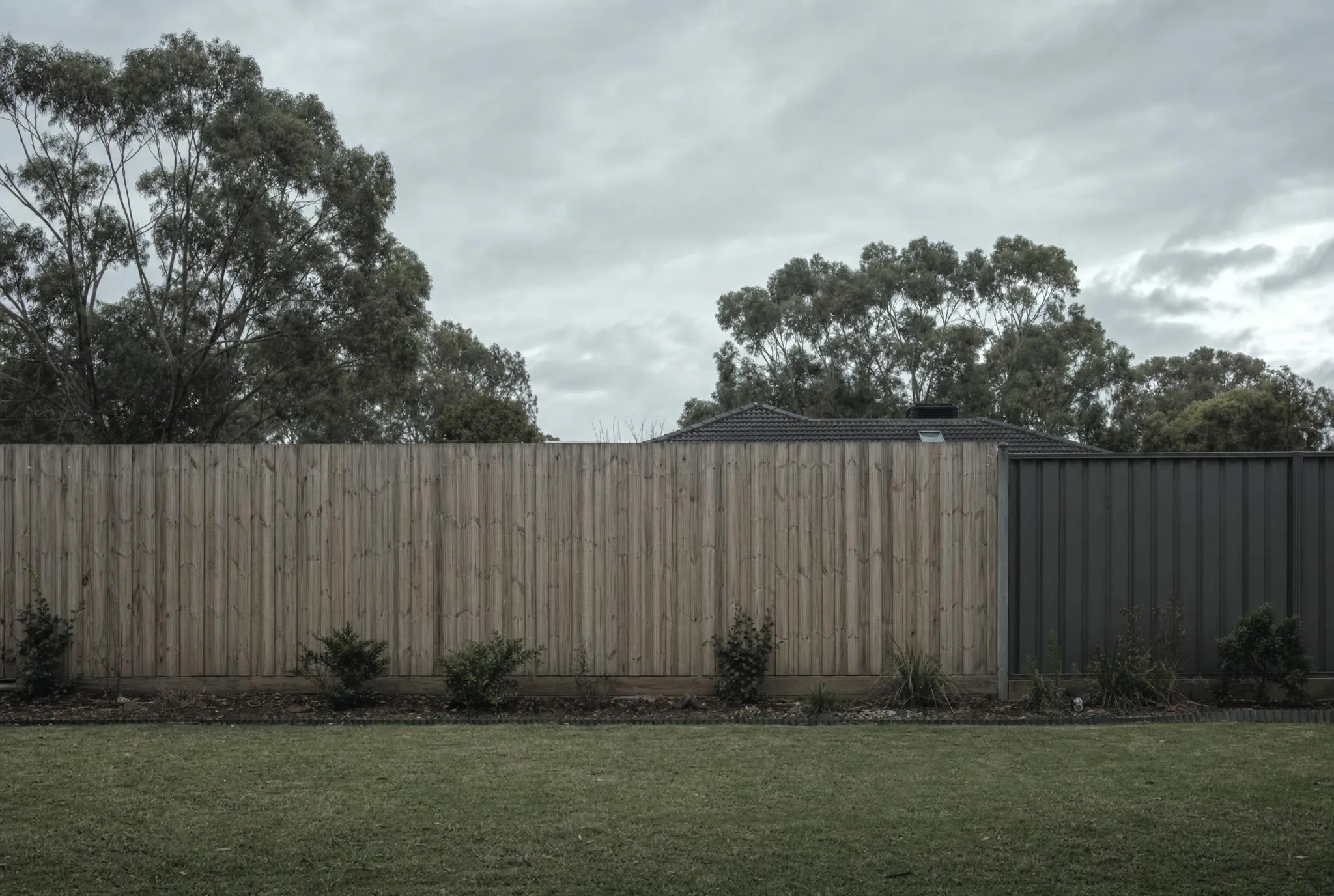
How high can a fence be in Queensland?
Up to 2 m, you can usually build a fence in Queensland without any approval. Taller than that needs building approval. Your neighbour only has to help pay for a basic fence up to 1.8 m.
- Without approval
- Up to 2 m for an ordinary fence, measured from the natural ground under the fence. No permission needed 1
- Front fences
- Up to 2 m can sit right on the street boundary. On a corner block, keep to 1 m near the corner so drivers can see 4
- Approval needed when
- Over 2 m. You need building approval, and the fence may have to sit further back from the street 1
- Who pays (dividing)
- You and your neighbour split the cost of a basic fence up to 1.8 m, half each. Want taller or fancier? You pay the extra 3
- Pool fences
- At least 1.2 m — a minimum, not a maximum like the rest of this page. Separate standard, separate certificate; see our Queensland pool fence page 1
- Retaining walls
- In law it isn't a fence. You skip approval only if the wall and the soil it holds total under 1 m, and it sits 1.5 m clear of buildings 1
- Your council
- The 2 m limit is state-wide and your council can't change it. It can change where a fence sits, though, so check yours if your block is a corner, heritage or small lot 2
Two numbers do the work in Queensland. 2 m is how high you can build without asking anyone, and it is also how high a fence can be right on the street boundary. 1.8 m is a different thing entirely: it is the most your neighbour has to help pay for. 1 3 Most fence arguments here start with someone mixing those two up.
How high can you build a fence in Queensland without approval?
Up to 2 m, and nobody needs to be asked.
Queensland’s starting position is that all building work needs approval. There is then a short list of things that don’t, and fences up to 2 m are on it. That is worth holding onto, because it explains what happens the moment you go over. 5 1
s 4 → Sch 1, item 1(1) Fences up to 2 m are on the no-approval list Building Regulation 2021 (Qld) 1
4 Building work declared to be accepted development for Planning Act—Act, s 21 (1) For section 21(2) of the Act— (a) the building work (accepted development (self assessable)) mentioned in schedule 1 is prescribed […] (2) The building work mentioned in schedule 1 must comply with the relevant provisions within the meaning of section 21(5) of the Act. […] Schedule 1 — Accepted development (self assessable) […] 1 Work for particular fences, barriers and gates (1) Building work for a fence, if the fence is— (a) no higher than 2m above the fence's natural ground surface; and (b) not for a regulated pool.
That’s why 2.1 m isn’t a slightly bigger fence. It’s a different world. Go over and you fall off the list and back onto the default: approval for the whole thing. 2
s 20 Everything taller: approval is the default Building Act 1975 (Qld) 2
All building work is assessable development, unless the building work is accepted development under section 21(2) or a regulation made under the Planning Act.
Two conditions ride along with the 2 m. It can’t be a pool fence — those have their own standard and the 2 m rule never touches them. And it still has to follow the ordinary siting rules about where a fence can go, which is the next section.
Where do you measure the 2 m from?
From the natural ground surface — the ground as it was before anyone built anything on it. Not from the top of soil you have brought in, and not from the top of a retaining wall. 1
On a flat block that is a technicality. On a sloping one it decides the answer, and usually not the way people expect.
Say you have a 900 mm retaining wall and you put a 1.5 m fence on top. That is not a 1.5 m fence. Measured from the natural ground underneath, it is 2.4 m, which is over the limit and needs building approval. Brisbane City Council states the same thing in its own words: fence height includes the combination of screens, fences and retaining walls. 1
The retaining wall still has its own separate test — its own 1 m limit, further down this page — but passing that test does not buy the fence any extra height. The two rules both apply, and the fence is always measured from the bottom.
How high can a front fence be in Queensland?
Also 2 m, but you get there a different way, and the difference matters if you go over.
Anything you build near the street normally has to sit a set distance back from the boundary. Fences up to 2 m are excused from that, so they can run right along the front. 4
MP 1.2, P1/A1(d) Fences up to 2 m can sit on the street boundary Queensland Development Code MP 1.2 — Design and siting standard for single detached housing (MP 1.1 is in identical terms for lots under 450 m²) 4
P1 The location of a building or structure facilitates an acceptable streetscape […] A1 […] (d) For structures the minimum road setbacks are as for A1(a),(b), and (c) except for— (i) swimming pools […]; and (ii) screens, fences, retaining walls or a combination of screens, fences or retaining walls not more than 2m in height
Go over 2 m at the front and you lose two things at once. You need building approval. You also lose the right to sit on the boundary, so the fence has to move back from the street the way a shed or carport would. A 2.2 m front fence on the boundary isn’t a slightly taller fence. It’s a fence in the wrong place. 4
What if you’re on a corner block?
One extra rule, and it is the strictest number on this page. Where your two street frontages meet, the corner is cut off at an angle, and inside that cut-off nothing can go above 1 m. It is there so drivers can see each other around the corner. 4
MP 1.2, A7 Corner blocks: the 1 m sight-line limit Queensland Development Code MP 1.2 — Design and siting standard for single detached housing (MP 1.1 is in identical terms for lots under 450 m²) 4
Fences, screens, and retaining walls and other structures are not more than 1m high within a truncation made by 3 equal chords of a 6m radius curve at the corner of the 2 road frontages
In practice a corner block often runs a 2 m fence down most of its length, then drops to 1 m for the last few metres. Worth knowing before you order materials.
Who pays for a dividing fence in Queensland?
This is a different question from everything above, and it is the one that causes the arguments. Everything so far has been about how high you’re allowed to build. This is about how much of it your neighbour has to pay for, and the two numbers are not the same.
The law works from a “sufficient dividing fence” — its name for a basic, ordinary boundary fence. Between 0.5 m and 1.8 m, in the usual materials: timber palings, chain wire, metal panels, brick. 3
You split that half each. Anything beyond it is yours alone. 3
s 21 Equal shares — and who pays for a fancier fence Neighbourhood Disputes (Dividing Fences and Trees) Act 2011 (Qld) 3
(1) Adjoining owners are each liable to contribute equally to carrying out fencing work for a sufficient dividing fence. (2) An adjoining owner who wants to carry out fencing work for a dividing fence to a standard greater than the standard for a sufficient dividing fence is liable for the fencing work to the extent that it is greater than the standard for a sufficient dividing fence.
So you can legally build to 2 m and still only claim half of 1.8 m. If you want the taller fence and your neighbour wants the cheapest one that works, you pay the difference. That is the ordinary outcome here, not a dispute.
There’s a set process. You give your neighbour a notice to contribute, which is an official form with at least one written quote attached. If you can’t agree within a month, either of you can take it to QCAT, Queensland’s tribunal for everyday disputes, within two months of the notice. 3
On farm land the height band doesn’t apply at all. A basic fence there is whatever holds the livestock actually grazing on each side. 3
What happens if you and your neighbour disagree?
Fence arguments follow the path the Act lays down. Here’s how it goes.
First, you write to your neighbour. There’s a form for this, called a notice to contribute. You fill it in, get a quote from a fencing contractor, and attach it. The form says what fence you want, where it goes, and what it will cost. 3
Then you have a month. From the day your neighbour gets that notice, the two of you have one month to sort it out between yourselves. 3
If you still can’t agree, either of you can apply to QCAT. That’s the Queensland Civil and Administrative Tribunal. It settles everyday disputes between people, and you don’t need a lawyer. Apply within two months of sending the notice. 3
QCAT only decides the money. It won’t tell you what fence to have. It works out what a basic fence would cost, meaning one between 0.5 m and 1.8 m, and your neighbour pays half of that. Want something taller or nicer? Build it. You just pay the extra yourself. 3
One more thing, because it catches people out. The building rules are separate from all of this. If your fence is over 2 m you needed approval before you built it, and you still need it afterwards. Finishing the job doesn’t fix that. 2
Can your council change the fence rules in Queensland?
Partly. The 2 m no-approval rule is state-wide, and that one doesn’t change from council to council. 1
The rules about where a fence can go, like the street-boundary ones above, are different. They’re state defaults, and your council’s planning scheme is allowed to replace them with its own versions. Where it does, the council’s version wins. 2 5 If your block is unusual, say a corner, a heritage area or a small lot, it’s worth a quick look at your council’s scheme.
Queensland is partway through changing these siting rules, and it does not change your answer. The 2010 standards are being replaced by a new Queensland Housing Code, which sets the same 2 m limit to a boundary. 7
Ch 1, s 10 — P10/A10 The Housing Code: still 2 m to a boundary Queensland Housing Code (pending publication version, QDC Parts 1.1 and 1.2) — Department of Housing and Public Works 7
P10 Fences, walls and screens 1. Building work ensures that a fence, wall or screen that is provided in association with a dwelling: a. facilitates security and privacy; b. minimises the impact on the amenity and privacy of residents of adjoining premises; c. facilitates casual surveillance of public space adjoining any frontage boundary; and d. enhances the use of private open space. […] A10 Frontage and common boundaries 1. A fence, privacy fence, privacy screen, retaining wall or free-standing wall with a maximum height of 2m can be built to boundary. 2. A reference to a fence, privacy fence, privacy screen retaining wall or free-standing wall includes a structure that is a combination of these elements and must not exceed a maximum height of 2m. Note 1. Adopting local governments may vary the default acceptable solutions for a fence, privacy fence, privacy screen, free standing wall or retaining wall on a frontage boundary by including alternative provisions in the relevant local government planning scheme under section 33 of the Building Act. […] 3. Further requirements for heights of dividing fences apply under the Neighbourhood Disputes (Dividing Fences and Trees) Act 2011.
The changeover happens council by council. Your council keeps using the old standards until it updates its own planning scheme, and every council has until 1 September 2029 to do that. 1 Either way the 2 m stands, so there is nothing to wait for and nothing to redo.
The one thing that can still move is the street boundary, because a council can set its own number for front fences in its scheme. Pool barriers and dividing-fence costs are unaffected — those sit under separate rules, exactly as they do on this page today.
s 106(2) The Housing Code transition runs council by council Building Regulation 2021 (Qld) 1
Former sections 6 and 80 and former schedule 7 continue in force in relation to the local government's planning scheme until the earlier of the following days— (a) if the scheme is amended to state how the Queensland Housing Code applies in relation to the scheme—the effective day for the amendment; (b) 1 September 2029.
The rules quoted on this page are the 2010 standards, and they are still the binding ones today. 6
What about pool fences and retaining walls in Queensland?
Pool fences play by their own rules. A fence around a pool is never covered by the 2 m no-approval rule, and the neighbour cost-sharing rules don’t apply to it either. It has to meet Queensland’s pool-safety standard whatever its height. 1 3
A retaining wall isn’t a fence in law at all, and its no-approval rule is much stricter. The wall and the soil it holds back have to total no more than 1 m. It has to sit at least 1.5 m clear of any building or other retaining wall. And nothing extra can be pressing on it from above, which the law calls “surcharge loading”. 3
Sch 1, item 3(1) Retaining walls have their own accepted-development test Building Regulation 2021 (Qld) 1
Schedule 1 — Accepted development (self assessable) […] 3 Work for particular retaining walls (1) Building work for a retaining wall, other than work for a retaining wall that forms part of the fencing for a regulated pool, if— (a) there is no surcharge loading over the zone of influence for the wall; and (b) the total height of the wall and of the fill or cut retained by the wall is no more than 1m; and (c) the wall is no closer than 1.5m to a building or another retaining wall.
Building a fence on top of a retaining wall? You’re dealing with both sets of rules at once. The wall’s 1 m limit and the fence’s 2 m limit are measured separately, and your neighbour’s contribution only ever covers the fence part.
Common questions
How high can a fence be between neighbours in Queensland?
You can build up to 2 m without approval. Your neighbour only has to help pay for a basic fence between 0.5 m and 1.8 m, though. Anything above that basic standard is your cost alone. 3
Do I need council approval for a 2 m fence in Queensland?
No. At 2 m or under, measured from the natural ground beneath the fence, you need no building approval. The conditions are that it isn't a pool fence and it follows the standard placement rules, like the corner-visibility limit. If your block is unusual, say a corner, a heritage area or a small lot, check your council's planning scheme too. 1
Can I build a 2.4 m fence in Queensland?
Not without approval. Anything over 2 m needs building approval. At the front of the block it also has to sit back from the street, like any other structure. 1
How high can a colorbond fence be in Queensland?
The same as any other fence. The limits are about height, and the material makes no difference. Up to 2 m needs no approval, and metal panels count as a normal material for a basic dividing fence. 3
Who pays for a boundary fence in Queensland?
You and your neighbour split the cost of a basic fence half each. Whoever wants something taller or fancier pays the extra. Start with a notice to contribute, which is an official form with a quote attached. If you can't agree within a month, either side can take it to QCAT. 3
How high can a retaining wall be without approval in Queensland?
A retaining wall isn't a fence in law, and its rule is stricter. You skip approval only if the wall and the soil it holds back total 1 m or less, it sits at least 1.5 m from any building or other retaining wall, and nothing extra is pressing on it from above. 1
What is the legal height of a pool fence in Queensland?
A pool fence has a MINIMUM height, not a maximum: at least 1.2 m. That is the opposite of the fence rules on this page, which are ceilings. Pool barriers also have their own standard and their own approval path — see [pool fence rules in Queensland](/pool-fences/qld/). 1
Every source on this page
The small numbered marks throughout this page point to this list — 1 means source 1 below.
- Building Regulation 2021 (Qld), Sch 1, items 1 & 3; s 106
- Building Act 1975 (Qld), ss 20, 21, 30, 32, 33
- Neighbourhood Disputes (Dividing Fences and Trees) Act 2011 (Qld), ss 9, 11–13, 20–21, 31
- Queensland Development Code MP 1.2 — Design and siting standard for single detached housing (MP 1.1 is in identical terms for lots under 450 m²), P1/A1(d), P2/A2(c), P7/A7 (published 11 March 2010)
- Planning Act 2016 (Qld), ss 43, 44
- Business Queensland — QDC current parts register
- Queensland Housing Code (pending publication version, QDC Parts 1.1 and 1.2) — Department of Housing and Public Works, Ch 1 s 1 A1.11; s 10 P10/A10 — published 3 August 2026, not yet in force
- Business Queensland — Background of the Queensland Development Code
Sourced from the Queensland Legislation website at 28 Aug 2026. For the latest information on Queensland Government legislation please go to https://www.legislation.qld.gov.au © State of Queensland. Licensed under CC BY 4.0. Reproduced without changes. This is not an official version. Creative Commons Attribution 4.0 licence.
© State of Queensland. Sourced from housing.qld.gov.au at 28 Aug 2026. Reproduced without changes. This is not an official version.
© State of Queensland. Sourced from housing.qld.gov.au at 29 Aug 2026. Reproduced without changes. This is not an official version.
Fence heights in your council area
The rules above cover all of Queensland. Some councils add their own on top, and we cover one in detail.
- Brisbane Up to 2 m
Other rules for Queensland
- Are e-bikes legal in Queensland? Legal, with conditions
- Are e-scooters legal in Queensland? Legal, with conditions
- Is it legal to record a conversation in Queensland? Legal, with conditions
- What are the pool fence rules in Queensland? Legal, with conditions
Fence heights rules elsewhere
- Australian Capital Territory Legal, with conditions
- New South Wales Legal, with conditions
- Northern Territory Legal, with conditions
- South Australia Legal, with conditions
- Tasmania Legal, with conditions
- Victoria Legal, with conditions
- Western Australia Varies by area
Page history
Every change to this page
- 3 Sept 2026
- Re-checked the Queensland Housing Code. It is no longer pending: the Building Regulation 2021 reprint current from 14 August 2026 carries it and the register states every provision has commenced. The page had said it was proposed to start on 1 September 2026 subject to approval. The 2 m limit is unchanged, and each council keeps the old settings until its scheme is amended or 1 September 2029.
- 29 Aug 2026
- Corrected the start date for the new Queensland Housing Code. It is proposed to start on 1 September 2026 but still needs approval, so this page no longer treats the date as settled. The 2 m limit does not change under it.
- 28 Aug 2026
- First published, during the changeover to the new Queensland Housing Code. The rules shown are the 2010 standards, which still apply.