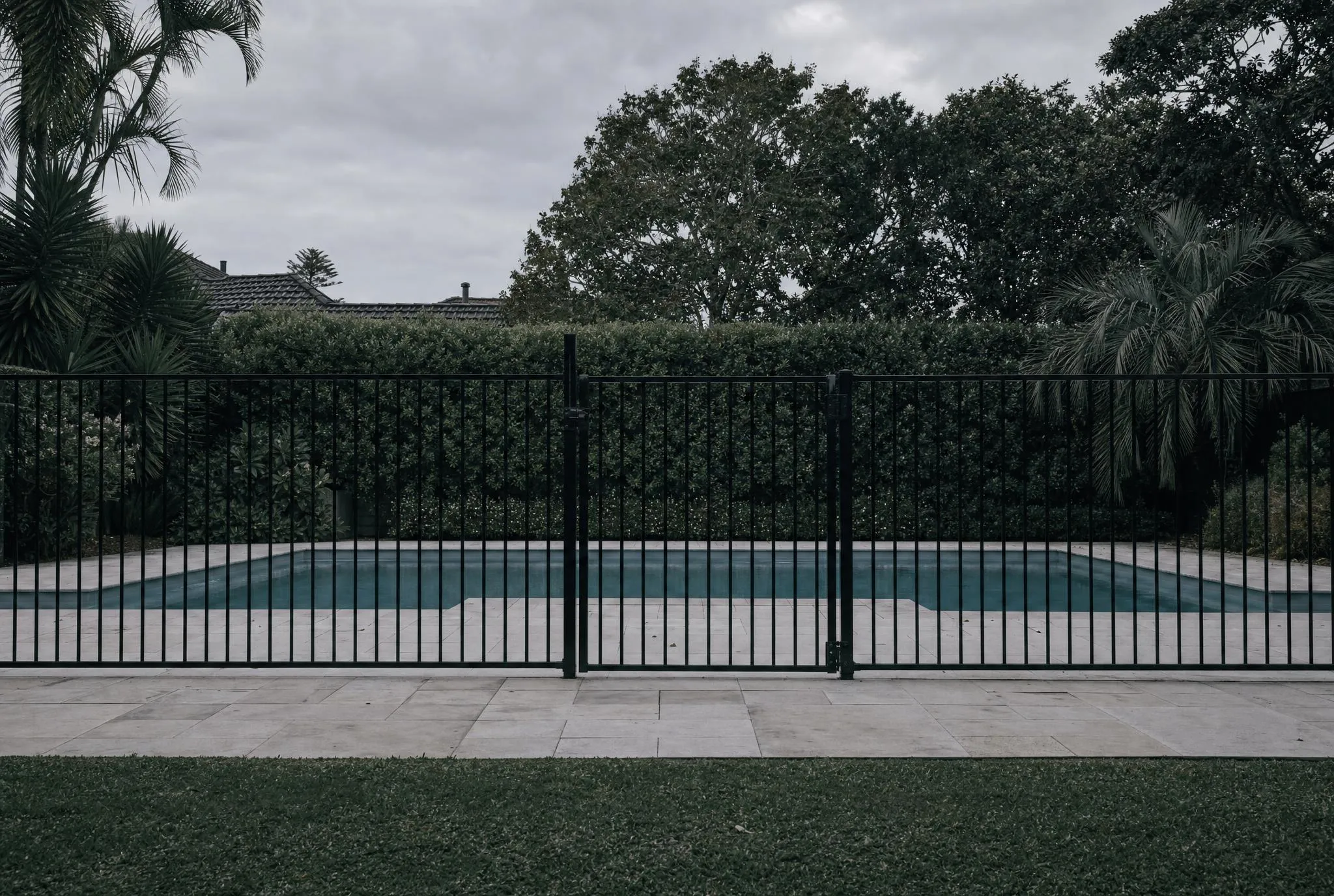
What are the pool fence rules in the ACT?
The ACT rebuilt its pool rules in 2024. Every pool more than 30 cm deep needs a working child-resistant barrier now, and every pool has to meet the named standards by 1 May 2028.
- Barrier required when
- Any pool, spa or demountable pool more than 30 cm deep at a home. Inflatable pools with no filtration system are left out, and hotel and public pools have their own rules 1
- Height & standard
- At least 1.2 m. Pools from before May 2023 follow AS 1926.1—2012 and AS 1926.2—2007, with the building code as it stood on 1 May 2023. Newer pools follow the current building code 2
- How often it's checked
- An authorised inspector checks the pool and issues a compliance status certificate, which is the document that says whether it meets the standards. One issued before May 2028 runs to 30 April 2032. Later ones last 5 years 1
- Selling or leasing
- The sale contract has to include pool documents. For now you can use a disclosure statement you fill in yourself. From 1 May 2028 you need a real certificate 3
- Fines
- $4,800 for a barrier you haven't maintained or a gate left open (30 penalty units at $160). These are strict-liability offences 1
- The 2028 deadline
- Every pool has to meet the named standards by 1 May 2028. Until then, a barrier that met the standard it was built to still does the job 2
If you have a pool in Canberra, one date matters more than any number on this page: 1 May 2028. From then, every pool in the Territory has to meet the full safety standards, however old it is. 1
The ACT rebuilt these rules in 2024, so they are the newest in the country, and they arrived with that deadline attached. Older pools that have been fine for decades on the standards of their day do not get to stay that way. Ending that is the point of the date. If your barrier predates the change, 2028 is the year it has to be brought up. Booking that work now beats joining the queue that forms closer to the deadline.
Which pools need a barrier in the ACT?
Any regulated swimming pool, which means more than 30 cm deep and used mainly for getting in the water. Spas and demountable pools count. The exclusion list is quite specific, and for inflatable pools the line is drawn at filtration. 1
s 83B(1) Which pools are covered — and which aren't Building Act 2004 (ACT) 1
regulated swimming pool— (a) means an excavation, structure or vessel that— (i) can be filled with water to a depth of 300mm or more; and (ii) is used, designed or manufactured mainly for human aquatic activity; and (b) includes the following: (i) a demountable swimming pool; (ii) a flotation tank or flotation tub not equipped to create bubbles or turbulence into water; (iii) a spa; but (c) does not include the following: (i) a bath in a bathroom; (ii) a birthing pool used only for waterbirths; (iii) an ornamental pond; (iv) a water feature; (v) a pool at a category 1 facility; (vi) a pool at short-term accommodation premises; (vii) an inflatable pool; (viii) anything else prescribed by regulation.
The definition of a “barrier” is generous. Walls, balustrades and even natural features can form part of one, and a spa is allowed a lockable child-resistant structure instead of a fence. 1
What standard does an ACT pool barrier have to meet?
At least 1.2 m. No ACT document says so directly, but that is the figure the standards it points to have carried for years, and it is what your inspector will measure against.
Which standard applies depends on one date: 1 May 2023. Pools older than that follow a fixed combination, being the building code as it stood then plus AS 1926.1—2012 and AS 1926.2—2007. Newer pools, and ones substantially altered since, follow the current building code. Either way you are working to 1.2 m, and your inspector confirms the detail. 2
s 36D The standards: frozen for old pools, current code for new Building (General) Regulation 2008 (ACT) 2
(1) The following are prescribed: (a) for a pool built before 1 May 2023—the following taken together: (i) the building code as in force on 1 May 2023; (ii) AS 1926.1 (2012) (Swimming pool safety, Part 1: Safety barriers for swimming pools); (iii) AS 1926.2 (2007) (Swimming pool safety, Part 2: Location of safety barriers for swimming pools); and (b) for a pool built or substantially altered on or after 1 May 2023—the building code. (2) In this section: substantially altered, in relation to a swimming pool, means at least 50% of the pool, or the safety barrier for the pool, is modified, demolished or replaced.
What applies right now, and what changes in 2028?
Two duties have been live since 1 May 2024 for every pool, whatever its age. The owner has to keep an effective child-resistant barrier in good order. 1
s 83N(1)–(2) The duty in force now: an effective barrier, maintained Building Act 2004 (ACT) 1
(1) A person commits an offence if— (a) the person is the owner of premises on which a regulated swimming pool is located; and (b) the person fails to maintain a safety barrier for the pool that is an effective and safe child-resistant barrier. Maximum penalty: 30 penalty units. (2) For subsection (1)(b) a safety barrier is an effective and safe child-resistant barrier if the barrier— (a) complies with the safety standards for a regulated swimming pool; or (b) if the swimming pool is subject to a Ministerial exemption—complies with the safety standards to the extent the pool is not exempt from the standards; or (c) complies with a requirement prescribed by regulation.
The occupier has to keep every way in securely closed. 1
Both are strict liability offences at $4,800 each, so what you intended doesn’t matter. There is some give in the meantime. Until 30 April 2028, a barrier that met the rules in force when it was built still satisfies the maintenance duty. 2
s 36G Until 30 April 2028: your original standard still counts Building (General) Regulation 2008 (ACT) 2
(1) This section applies to a regulated swimming pool that is not subject to— (a) a standing exemption; or (b) a Ministerial exemption. (2) A safety barrier for the regulated swimming pool is an effective and safe child-resistant barrier if the barrier complies with the requirements for the barrier as in force immediately before the commencement of this section. (3) This section expires on 30 April 2028.
After 1 May 2028 that runs out, and the named standards become the minimum for every pool in the ACT. 2
What do you need to sell a house with a pool in the ACT?
Compliance status certificates come from authorised inspectors and say whether the pool meets the safety standards. Early ones all run to the same date, 30 April 2032, and after that the system settles into five-year terms. 1
s 83L(1) Certificates: to 30 April 2032, then 5-year terms Building Act 2004 (ACT) 1
A compliance status certificate […] is in force for the period beginning on the day the certificate is issued and ending on the earliest of— (a) whichever of the following applies: (i) for a certificate issued before 1 May 2028—30 April 2032; (ii) for a certificate issued on or after 1 May 2028—the day 5 years after the period begins; (b) the day the regulated swimming pool, or the safety barrier for the pool, is substantially altered […]
When you sell, the duty sits in the conveyancing law rather than the Building Act. Pool documents are among the required documents that have to come with a residential sale contract. 3
s 9(1)(k) Pool documents are part of the sale contract Civil Law (Sale of Residential Property) Act 2003 (ACT) 3
(1) For this part, the required documents, in relation to a sale of residential property, are a copy of the proposed contract for the sale of the property (other than the excluded particulars) including the following documents: […] (k) if there is a regulated swimming pool on the premises covered by the proposed contract—the documents prescribed by regulation;
For now, a disclosure statement you fill in yourself is enough. No inspection needed. 4
s 10B(1)–(2) Which pool documents — self-declaration allowed, for now Civil Law (Sale of Residential Property) Regulation 2004 (ACT) 4
(1) If the regulated swimming pool was built before 1 May 2023—the following documents are prescribed: (a) a copy of the notifiable instrument made under the Building Act 2004, section 83H; (b) a document mentioned for whichever of the following circumstances apply: […] (ii) in any other case—any of the following: (A) a swimming pool disclosure statement for the premises covered by the contract; (B) a compliance status certificate for the pool; (C) a certificate of occupancy for the pool and safety barrier that is not older than 5 years after the day it was issued. (2) If the regulated swimming pool was built or substantially altered on or after 1 May 2023—any 1 of the following documents is prescribed: (a) a swimming pool disclosure statement for the premises covered by the contract; (b) a certificate of occupancy for the pool and safety barrier that is not older than 5 years after the day it was issued; (c) a compliance status certificate for the pool.
That option has an end date, and it’s the same day the barrier grace period ends. From 1 May 2028, standard sales will need an actual compliance status certificate, or a recent occupancy certificate. 5
One honest limit on all of that: the rule we found is about sales. Leasing is less clear. The ACT Government’s guidance mentions disclosure, but there is no equivalent rule for leasing a standalone house, so ask your agent what applies. 6
There’s one more ACT quirk worth remembering. Everything built on a block has to fit its Crown lease, and the fence still has to pass the ordinary planning and building exemption tests as a structure. That’s three separate legal tests on the same fence. 1
What happens on 1 May 2028?
Two things expire on the same day, and together they change what an ACT pool owner has to have.
The barrier grace period ends. Until then, a barrier that met the rules in force when it was built still satisfies the maintenance duty. After it, the named standards are the minimum for every pool in the Territory, however old. A barrier that has been fine for thirty years can stop being fine that morning. 2
The self-declaration option goes. Right now a seller can satisfy the contract requirement with a disclosure statement they fill in themselves. From 1 May 2028 a standard sale needs an actual compliance status certificate, or a recent occupancy certificate. 5
Certificates are worth timing against that. One issued before May 2028 runs to 30 April 2032, which is longer than the five-year term that follows. Any certificate ends early if the pool or barrier is substantially altered. 1
In the meantime the two live duties are strict liability at $4,800 each, so what you intended doesn’t come into it: keep the barrier working, and keep every way in closed. 1
What it costs to get it wrong
| Offence | Penalty | Source |
|---|---|---|
| Failing to maintain an effective child-resistant safety barrier (owner) | $4,800 (30 penalty units at $160; strict liability) | 1 |
| Failing to keep the barrier's access points securely closed (occupier) | $4,800 (strict liability) | 1 |
| Failing to lodge a compliance status certificate when required | $3,200 (20 penalty units) | 1 |
Common questions
How high does a pool fence need to be in the ACT?
At least 1.2 m. ACT law does not state the figure itself, but that is what the standards it names have carried for years, and what your inspector will measure against. Which standard applies turns on one date. Pools from before May 2023 follow AS 1926.1—2012 and AS 1926.2—2007, plus the building code as it stood on 1 May 2023. Newer pools, or ones substantially altered since, follow the current building code. 2
My pool is old — do the new ACT rules apply to it?
Yes, in two stages. Right now every pool needs a working child-resistant barrier that you keep maintained. Until 30 April 2028, a barrier that met the rules in force when it was built still counts. From 1 May 2028 the named standards become the minimum for every pool, old or new. 2
Do inflatable or portable pools need a fence in the ACT?
It comes down to filtration, which is an unusual place to draw the line. A plain inflatable pool with no filtration system is left out. A demountable pool, meaning one you assemble by hand, or an inflatable-style pool that does have filtration, is covered once it is more than 30 cm deep and needs a barrier. 1
Do I need a pool certificate to sell my house in the ACT?
Not a certificate, yet. The sale contract has to include the required pool documents, and for now any one of three will do: a swimming pool disclosure statement you fill in yourself, a compliance status certificate, or a certificate of occupancy less than 5 years old. Pools from before May 2023 also need the official guidance material attached. From 1 May 2028 the self-declaration option goes for standard sales, and you will need an actual certificate. 4
What are the fines for pool-barrier breaches in the ACT?
$4,800, or 30 penalty units, if an owner doesn't keep the barrier working, and the same if an occupier leaves an access point open. Both are strict-liability offences, so what you meant to do doesn't come into it. Not lodging a required compliance certificate costs $3,200. 1
Does a spa need a fence in the ACT?
Yes, spas are covered, but you get an alternative built for them. A lockable child-resistant structure counts as the spa's barrier, as long as it is securely fitted and locked whenever the spa isn't in use. 1
Who inspects pool barriers in the ACT?
Authorised persons appointed under the Building Act inspect pools and issue compliance status certificates saying whether the pool meets the safety standards. One issued before May 2028 runs to 30 April 2032. Later ones last five years. Any certificate ends early if the pool or barrier is substantially altered. 1
Does my Crown lease affect my pool fence in the ACT?
It can. As with everything built in the ACT, the work has to fit your block's Crown lease, and the usual planning and building exemption tests apply to the fence as a structure as well. Three separate legal tests can land on the same fence. 1
Every source on this page
The small numbered marks throughout this page point to this list — 1 means source 1 below.
- Building Act 2004 (ACT), Part 5A — ss 83–83R (Republication 55)
- Building (General) Regulation 2008 (ACT), Part 3A — ss 36D, 36G (Republication 51)
- Civil Law (Sale of Residential Property) Act 2003 (ACT), s 9(1)(k) (Republication 32)
- Civil Law (Sale of Residential Property) Regulation 2004 (ACT), s 10B (Republication 21)
- Building (Swimming Pool Safety) Legislation Amendment Act 2023 (ACT), ss 2(2), 29 (A2023-46 — s 29 commences 1 May 2028)
- ACT Government (Planning) — Home swimming pool safety reforms
- Legislation Act 2001 (ACT), s 133 — penalty unit $160
© Australian Capital Territory. Sourced from the ACT Legislation Register at 28 Aug 2026. For current law please go to https://www.legislation.act.gov.au. Licensed under CC BY 4.0. Reproduced without changes. This is not an official version. Creative Commons Attribution 4.0 licence.
© Australian Capital Territory. Sourced from the ACT Legislation Register at 27 Aug 2026. For current law please go to https://www.legislation.act.gov.au. Licensed under CC BY 4.0. Reproduced without changes. This is not an official version. Creative Commons Attribution 4.0 licence.
Other rules for Australian Capital Territory
- Are e-bikes legal in the ACT? Legal, with conditions
- Are e-scooters legal in the ACT? Legal, with conditions
- How high can a fence be in the ACT? Legal, with conditions
- Is it legal to record a conversation in the Australian Capital Territory? Legal, with conditions
Pool fences rules elsewhere
- New South Wales Legal, with conditions
- Northern Territory Legal, with conditions
- Queensland Legal, with conditions
- South Australia Legal, with conditions
- Tasmania Legal, with conditions
- Victoria Legal, with conditions
- Western Australia Legal, with conditions
Page history
Every change to this page
- 28 Aug 2026
- First published. Current to the ACT pool-safety rules in the Building Act as at 10 July 2026.